
Last updated November 2, 2026
 Wrought iron
 Wood & steel frame
 Farm & ranch
 Sliding driveway gates
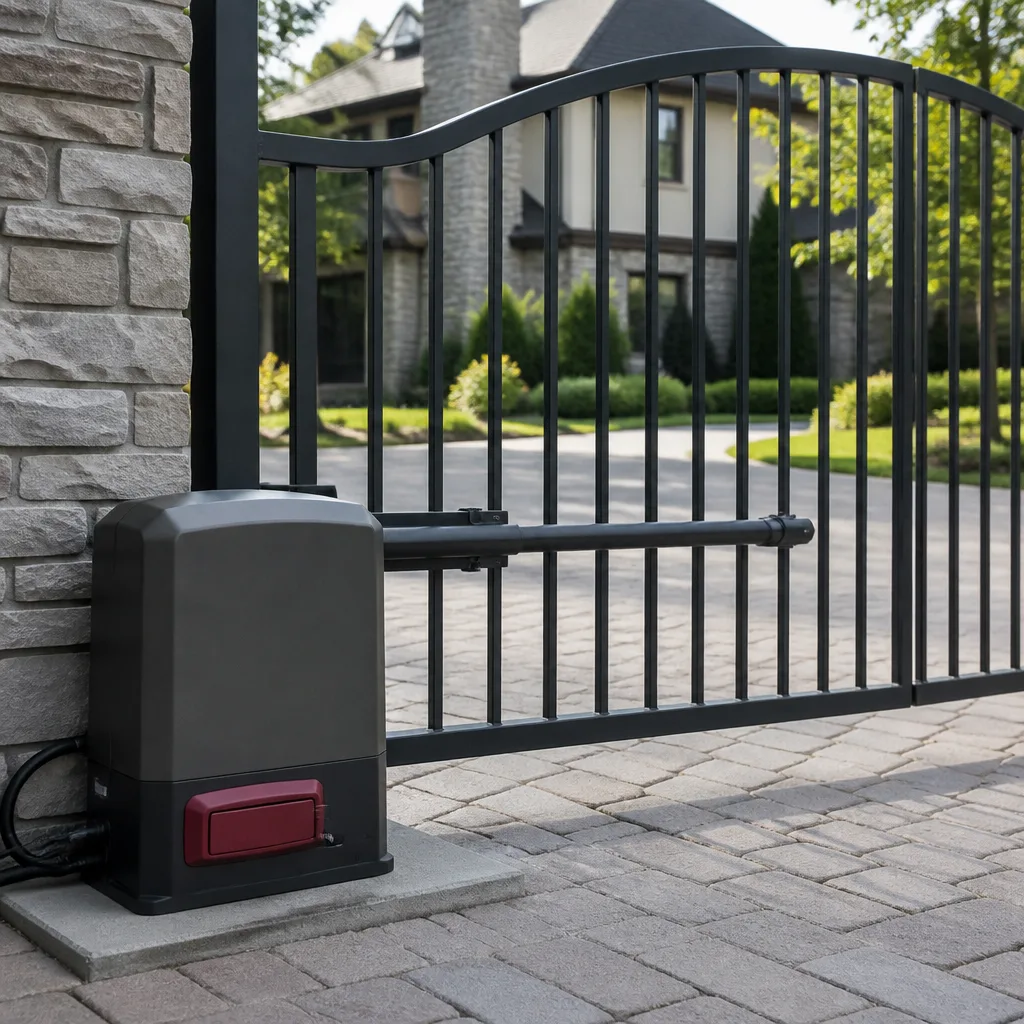 LiftMaster operators
Free on-site gate assessment - hinges, posts, and your LiftMaster or Nice gate operator checked before anything is quoted
The assessment is free and the quote is the invoice.
Get your free estimateGate Repair Permits, Codes & Inspections in CA: What You Need to Know
Most California homeowners believe gate permits only apply to brand-new installations. That assumption is expensive. Under Los Angeles County code, a permit is triggered by any automated gate modification that changes the entrapment protection zone, and that includes a motor swap or an arm replacement, not just a new gate. We’ve seen Hyde Park South homeowners discover this after the fact, when a refinance appraisal or an insurance claim brings the unpermitted work to light. This guide explains exactly what triggers a permit, what a UL 325 compliant installation actually requires, how inspections work, and where HOA rules override or conflict with municipal code. For more guides & resources, see our blog. If you own or manage an automated gate anywhere in California, especially in Hyde Park South, this is the reference you need before touching any hardware.
Quick Answer
Gate repair permits in California generally are not required for maintenance like tightening hardware, lubricating hinges, or replacing a remote battery. However, an LA County permit is required when a repair changes the entrapment protection zone of an automated gate, which includes replacing an operator motor, swapping a gate arm, changing the gate’s swing direction, or altering safety sensor placement. UL 325 compliance, which governs the photo eyes, contact edges, and reversing mechanism, applies to every automated gate regardless of whether the job itself needs a county permit.
Styles & brands we work with
- Wrought iron
- Wood & steel frame
- Farm & ranch
- Sliding driveway gates
- LiftMaster operators
Table of Contents
- What Repairs Actually Trigger a Permit in LA County
- UL 325 Entrapment Protection: The Requirement Every Gate Must Meet
- The Inspection Process: What an LA County Inspector Checks
- How LA County Classifies Repair vs. Maintenance Under LAMC 91.106
- HOA Gate Rules in Hyde Park South: When CC&Rs Override Municipal Code
- Liability Exposure for Property Managers in Multi-Unit Complexes
- How Branded Systems (FAAC, BFT, Linear, Viking) Affect Code Compliance
- Common Mistakes to Avoid
- When to Call a Professional
- Frequently Asked Questions
What Repairs Actually Trigger a Permit in LA County
The single most misunderstood rule in California gate work is this: a repair that swaps the operator motor on an automated gate requires a building permit in Los Angeles County if the change alters the entrapment protection zone. That zone is the area where a person or vehicle could be struck, pinned, or dragged by the moving gate. Replacing a motor with a different model, changing the mounting position of an arm, or adjusting the swing path all modify that zone. LAMC Section 91.106.1 treats any work that affects life-safety components of an automatic gate as a regulated modification, not routine repair.
What does this mean in practice for a Hyde Park South homeowner with a failing FAAC operator or a Linear arm that’s worn out? It means you cannot simply bolt on a replacement motor, declare the gate repaired, and assume the county is fine with it. The county is fine with it only if the replacement is identical in model, mounting configuration, and operational envelope to what was there before. Anything else is a modification, and a modification without a permit creates unpermitted-work liability that follows the property, not the person who did the work.
Here is the breakdown of what triggers a permit on a repair:
- Motor or operator replacement with a different model: Always requires a permit if the mounting points, arm geometry, or force settings change.
- Changing a swing gate to a slide gate or vice versa: Requires a permit, full stop. The entrapment zones are completely different.
- Moving safety sensors, photo eyes, or contact edges: Requires a permit because the protection zone has been altered.
- Extending or shortening a gate leaf: Changes the pinching geometry at the hinge zone. Permitted work.
- Adding or changing an access control panel that integrates with the operator: If the panel alters how the gate reverses on obstruction, it’s permitted work.
We tell our Gate Repair in Hyde Park South customers the same thing every time: if the repair changes how the gate detects an obstacle or where an obstacle could be, you need the permit. Our team works on all nine major brands, including FAAC and BFT commercial operators, and we check the compliance implications before turning a single bolt, not after the gate is back in service.
UL 325 Entrapment Protection: The Requirement Every Gate Must Meet
UL 325 is the national safety standard for automated gates, and California has adopted it directly into code. The rule is simple to state and frequently ignored: every automated gate must have a minimum of two independent entrapment protection devices, and any gate that can be operated automatically but is accessible to the public has to meet a stricter set of requirements than a private residential gate with a lock-out switch. The standard applies whether your gate is a Mighty Mule driveway unit or a Viking commercial slide gate at an apartment complex.
The core requirements break down by gate type and location:
- Class I, Residential: One primary entrapment protection device (photo eye or contact edge) plus an inherent reversing mechanism in the operator. The gate must reverse on contact with a certain force threshold.
- Class II, Commercial / General Public: Requires photo eyes, contact edges or equivalent, and an audio alarm when the gate is in automatic operation. The alarm must sound before movement begins.
- Class III, Industrial / Limited Access: Requires a monitored entrapment protection system, meaning the gate will not operate if a sensor has failed or been disconnected.
- Class IV, Restricted Access: Guarded or managed access with a permanently stationed operator. Still requires primary and secondary entrapment protection.
What UL 325 does not permit, under any classification, is a single photo eye positioned to protect only the leading edge of a slide gate while the tail end of the gate can pin someone against a fence or wall. That is a common shortcut we see on DIY repairs in Hyde Park South, and it is a code violation that can turn a minor injury into a serious liability claim. The standard also mandates that contact edges, when installed, must be wired as monitored devices on Class III and Class IV gates, meaning a cut wire or a disconnected edge shuts the gate down rather than silently disabling the safety feature.
For a full-system replacement, Gate Installation in Hyde Park South includes a UL 325 compliance check on every job. For motor replacements that alter the protection zone, the same standard applies, which is why we recommend professional installation over a handyman who does not stock the right safety components.
The Inspection Process: What an LA County Inspector Checks
If you pull a permit for an automated gate modification in Los Angeles County, you will get at least one inspection after the work is complete. The inspector is not checking paint quality or hinge lubrication. They are checking the entrapment protection system, and they will fail the inspection if the gate does not reverse properly, if the photo eyes are misaligned, or if the contact edges are not connected.
Here is what the inspector actually tests, step by step:
- Photo eye alignment: The inspector will block the beam while the gate is closing and confirm the gate reverses immediately. If the beam is off by a few degrees or mounted too high, it’s a fail.
- Contact edge function: For sliding gates with contact edges, the inspector will press the edge along its full length to verify the gate reverses regardless of where the pressure is applied.
- Inherent reversing force: The inspector applies resistance to the closing gate to confirm the operator’s built-in reversing threshold is set correctly. Too much force, and it’s a fail; too little means the gate cannot close against normal wind resistance.
- Warning signage: UL 325 requires specific signage mounted on both sides of the gate for Class II and above. The inspector checks that the signs are present, legible, and correctly worded.
- Audio alarm: On commercial gates, the inspector verifies the alarm sounds before the gate moves in automatic mode. No alarm, no pass.
- Latching and lock-off capability: The inspector confirms the gate cannot be forced manually in a way that defeats the operator, and that the manual release, if present, is padlockable for Class II and above.
Preparation matters. In our experience with inspected jobs, most first-pass failures in Hyde Park South come from two things: photo eyes that are not set at the correct height (typically 6 to 34 inches above grade, depending on the application), and contact edges that were installed but never wired into the operator’s monitored input. Both are easy to fix before the inspector arrives and expensive to fix after a fail, because the county will charge a re-inspection fee. A qualified gate technician should pre-test the full UL 325 sequence before calling for inspection.
How LA County Classifies Repair vs. Maintenance Under LAMC 91.106
Los Angeles Municipal Code Section 91.106 draws a clear line between maintenance and repair, and the line matters because maintenance does not need a permit. Maintenance is defined as work that restores a component to its designed operating condition without changing the component’s configuration, capacity, or function. Tightening a loose hinge, lubricating a roller track, replacing a worn battery in a remote, or cleaning and adjusting a photo eye lens are all maintenance.
Repair starts when you replace, relocate, or materially alter a component that affects the gate’s safety function. Replacing an operator motor with an identical motor is technically a repair, but if the replacement motor is the same make, model, and torque rating as the original, and the mounting and arm geometry do not change, many inspectors will treat it as maintenance in practice. The key phrase is “identical.” The moment the replacement is a different model, a different brand, or a different voltage, the entrapment protection zone is considered altered, and a permit is required.
Here is a practical guide we use with customers on the ground in Hyde Park South:
- Maintenance (no permit): Lubrication, hinge tightening, track cleaning, battery replacement, photo eye lens cleaning, keypad battery change, remote reprogramming.
- Borderline (call the county or rely on technician judgment): Replacing a controller board with an identical board, replacing a capacitor, rewiring an existing photo eye with the same wire gauge.
- Repair / modification (permit required): Operator motor swap to a different model, arm replacement with a different length or geometry, sensor relocation, gate leaf extension, access control panel change that affects reverse-on-obstruction logic.
The practical risk of misclassification is this: if the gate is later involved in an injury and the work was a modification done without a permit, the property owner and the contractor who did the work are both exposed. Insurance companies in California actively look for unpermitted modifications as a reason to deny entrapment-injury claims, and the discovery process often starts with a simple question: was the operator motor original to the gate? If the answer is no, and there is no permit on file, the liability shifts hard.
HOA Gate Rules in Hyde Park South: When CC&Rs Override Municipal Code
Hyde Park South is a neighborhood where the lots were subdivided at different times, and the homeowner association landscape is fragmented. Some streets fall under CC&Rs that date back to the 1940s and 1950s, long before automated gates were installed on any home in the area. Those documents typically say nothing directly about gate operators, but they often contain architectural review language that the HOA board interprets as authority over any gate visible from the street. That means a Hyde Park South homeowner can comply fully with LA County code and still be in violation of their CC&Rs, because the HOA’s architectural committee did not give written approval for a gate that faces a common area or a street-facing elevation. See our Gate Repair Warning Signs: A Hyde Park South Homeowner’s Reference Guide for additional context.
The layering works like this:
- Municipal code sets the floor: what is legally required for safety and permitting. An HOA cannot approve a gate that violates LAMC or UL 325, and no HOA rule preempts state-adopted safety law.
- CC&Rs set the ceiling in terms of aesthetics and placement: an HOA can restrict gate height, material, color, and location, even when the county code has no such restriction.
- HOA rules and architectural guidelines add process requirements: written approval, sometimes a fee, sometimes a specific hearing.
The conflict occurs when an HOA board interprets its architectural authority to mean it can require a specific gate design or motor placement that is actually less safe than what UL 325 recommends. We have seen Hyde Park South HOAs insist on a low-profile operator that was never certified for the gate weight they wanted to use, simply because the board preferred the look. When that happens, the county code wins on safety, but the homeowner still has to satisfy the board on the visual elements. In practice, this means getting written approval from the HOA on the visible components before any permit is pulled, then bringing in a technician who can document that the installed system meets UL 325 regardless of the aesthetic restrictions.
For an Electric Gate Repair in Hyde Park South job on an HOA-governed property, we always ask for the approval letter or the architectural committee sign-off before we start work. It keeps the homeowner out of a conflict where the gate is legal by county standards but requires removal under the CC&Rs.
Liability Exposure for Property Managers in Multi-Unit Complexes
Property managers overseeing gated communities or commercial lots in California hold a specific legal burden: the duty to maintain common-area entry systems in a safe operating condition. That duty is not satisfied by dispatching a handyman who tightens the chain and walks away. Under California case law, a property manager who knew or should have known that a gate was not UL 325 compliant can be held personally liable, alongside the owner entity, in an entrapment injury lawsuit. The argument that a gate was “working fine for years” is not a defense when the absence of a monitored contact edge or a failed photo eye contributed to the injury.
The exposure points are predictable:
- Audible alarm missing or disabled: The most common violation on commercial gates. The alarm is required by UL 325 for Class II and above. Disabling it to reduce noise complaints is a routine shortcut that creates specific liability.
- Photo eyes that were bypassed: When a gate cycles endlessly because of a misaligned photo eye, someone bypasses the beam to stop the service call. That bypass becomes the smoking gun in a lawsuit.
- Contact edges that are wired but never tested: A contact edge can be physically present but electrically dead. If a person is pinned against the tail post of a slide gate, the dead edge is discovered in discovery, and the property manager is on the record as having authorized repeated service calls that never included a full UL 325 test.
- Lack of documentation: No gate maintenance log, no test records, no repair invoices that list the specific UL 325 checks performed. Property managers lose these cases not because the gate was working, but because they cannot prove it was compliant.
We work with property managers on FAAC and BFT commercial systems where the gate is the largest physical liability on the property. The practical standard we recommend is an annual UL 325 test with written results, a photo inventory of sensor placement, and a sign-off that the audio alarm and all entrapment protection devices function as designed. The cost of the test is trivial compared to the cost of a deposition.
How Branded Systems (FAAC, BFT, Linear, Viking) Affect Code Compliance
Not all gate operator brands handle UL 325 compliance the same way, and the brand on the operator matters when you are deciding whether a repair qualifies as maintenance or a permitted modification. FAAC and BFT are Italian brands with a heavy presence in commercial applications. Their operators ship from the factory with UL 325 compliance built into the control board, but only if the installer wires the safety devices into the correct monitored inputs. An FAAC 415 or a BFT Deimos operator that is installed with the photo eye inputs left open will not pass an LA County inspection, regardless of what the manual says about inherent reversing.
Linear and Viking are common on residential and light commercial gates in the Hyde Park South market. Linear’s residential operators, like the LRA line, are designed for simplified installation, but the same simplification means the control board has fewer monitored inputs. If a homeowner replaces a Linear operator with a different brand and wires the photo eye to an unmonitored terminal, the gate will work, but it will fail a code inspection because the entrapment protection is not monitored in the way the code requires for that gate class. Viking’s commercial slide gate operators are Class IV capable, but again, the installer must enable the correct operating mode and wire the alarm output, which is a frequent miss.
The brand-specific point we make to customers is this: a UL 325 compliant gate is not a property of the motor. It is a property of the complete system, including the safety edges, photo eyes, alarm, and wiring. A good operator installed wrong is a non-compliant gate. That is why Gate Repair Hyde Park South home technicians work with the actual OEM brand on each job. We stock the correct monitored inputs and safety accessory kits for FAAC, BFT, Linear, and Viking systems, so there is no temptation to use a universal workaround that technically functions but fails the standard.
Common Mistakes to Avoid
- Replacing the motor without checking the model number: A homeowner assumes any motor that fits is the same motor. The county inspector disagrees when the torque curve or the arm geometry is different. Always match the model number or plan for a permit.
- Bypassing the photo eyes to stop the gate from cycling: We see this on Hyde Park South properties where a tree branch or a parked car intersects the beam. The bypass makes the gate operate, and it also disables the primary entrapment protection. If the gate later pins someone, the bypass is the first thing a plaintiff’s attorney finds.
- Treating the HOA as optional when the gate faces the street: The county permit process does not check CC&Rs. The HOA can require removal of a gate the county just approved. Get the architectural sign-off before pulling the permit.
- Assuming a handyman’s “gate repair” includes a UL 325 test: We regularly follow up on jobs where the gate opens and closes but the contact edge was never wired, or the audio alarm was not connected. A gate that moves is not a gate that is safe.
- Using a universal operator on a gate that needs a specific torque range: Universal operators are common on residential jobs, but installing one on a heavy Viking slide gate or an FAAC swing gate changes the force characteristics, which is a code-relevant modification and often not covered by the operator’s UL listing for that application.
- Failing to keep records of the original installation: When a gate is later involved in an incident, the property owner needs the original permit, the UL 325 test record, and any repair history. No records, no defense.
- Ignoring the audio alarm on a commercial gate because tenants complain: The alarm is not decorative. It is a UL 325 requirement for Class II and above. Muting it creates the exact liability a property manager should want to avoid.
When to Call a Professional
Any repair that involves the operator motor, the safety sensors, the control board, or the arm geometry deserves a professional who can evaluate the code implications before making the repair. If the gate is an automated one and the repair involves anything other than lubrication, battery replacement, or hinge tightening, call someone who works on your specific brand. A gate that fails, or a gate that will not close and secure the property, is also a case for immediate professional help rather than a DIY repair done under pressure. Our Gate Repair services include free estimates in Hyde Park South, call (877) 752-8839 and we will assess the gate, identify the code triggers, and give you a written quote before any work starts.
Frequently Asked Questions
A permit is required only when the repair changes the entrapment protection zone, which includes motor swaps to a different model, arm replacement with different geometry, sensor relocation, or any change to the gate’s swing or slide path. Routine maintenance like lubrication, tightening, and battery replacement does not need a permit. Call (877) 752-8839 to get a code assessment on your specific repair before work starts.
Permit fees vary by the valuation of the work, but for a typical automated gate modification the fee is in the range of $150 to $400, not including inspection fees or any plan review that applies to new installations. The exact figure depends on the scope and the jurisdiction. The bigger cost is an unpermitted modification that surfaces years later during a sale or an insurance claim, so the permit is the cheap part of the job.
UL 325 is the national safety standard for automated gate operators, and it applies to every automated gate regardless of whether it is residential or commercial. The standard requires entrapment protection devices such as photo eyes or contact edges, plus an inherent reversing mechanism, and it mandates audio alarms on gates accessible to the public. A residential Class I gate has fewer requirements than a commercial gate, but it is not exempt from the standard.
Yes, if your CC&Rs contain architectural review language that covers street-facing improvements, the HOA can require written approval for visible gate changes even if the repair itself does not need a county permit. The safest sequence is to get the HOA sign-off on visible components first, then handle the county permit if the repair changes the entrapment protection zone.
Probably not. California insurers routinely deny entrapment injury claims when the discovery process shows the gate was modified without a permit and the modification changed the safety system. The denial applies even if the accident would have happened anyway, because the unpermitted work creates a contractual exclusion under most policies. The long-term liability far outweighs the short-term savings of skipping the permit.
We work with you on the permit process for automated gate modifications in Hyde Park South, including the documentation of the UL 325 test results that the county inspector will want to see. We do not charge for the permit itself, that goes to the county, but we prepare the gate to pass inspection the first time. Call (877) 752-8839 for a free estimate.
The Bottom Line
California’s gate permit rules are not mysterious, but they are counterintuitive. The trigger is not whether a gate is new or old, it is whether the entrapment protection zone changes, and a motor swap or an arm replacement can trip it just as easily as a full installation. UL 325 compliance is a separate and non-negotiable requirement that follows every automated gate, regardless of permitting status. HOA rules in Hyde Park South add a layer on top of the county code, and property managers carry a specific, documented duty to keep commercial gates compliant. The smart play is simple: know the classification of the work before it starts, keep records, and when the repair touches the operator, sensors, or geometry, get a professional who works on your brand. Gate Repair Hyde Park South can be reached at (877) 752-8839 for a free estimate in Hyde Park South.
Written by the team at Gate Repair Hyde Park South, serving Hyde Park South since 2015.
See the difference
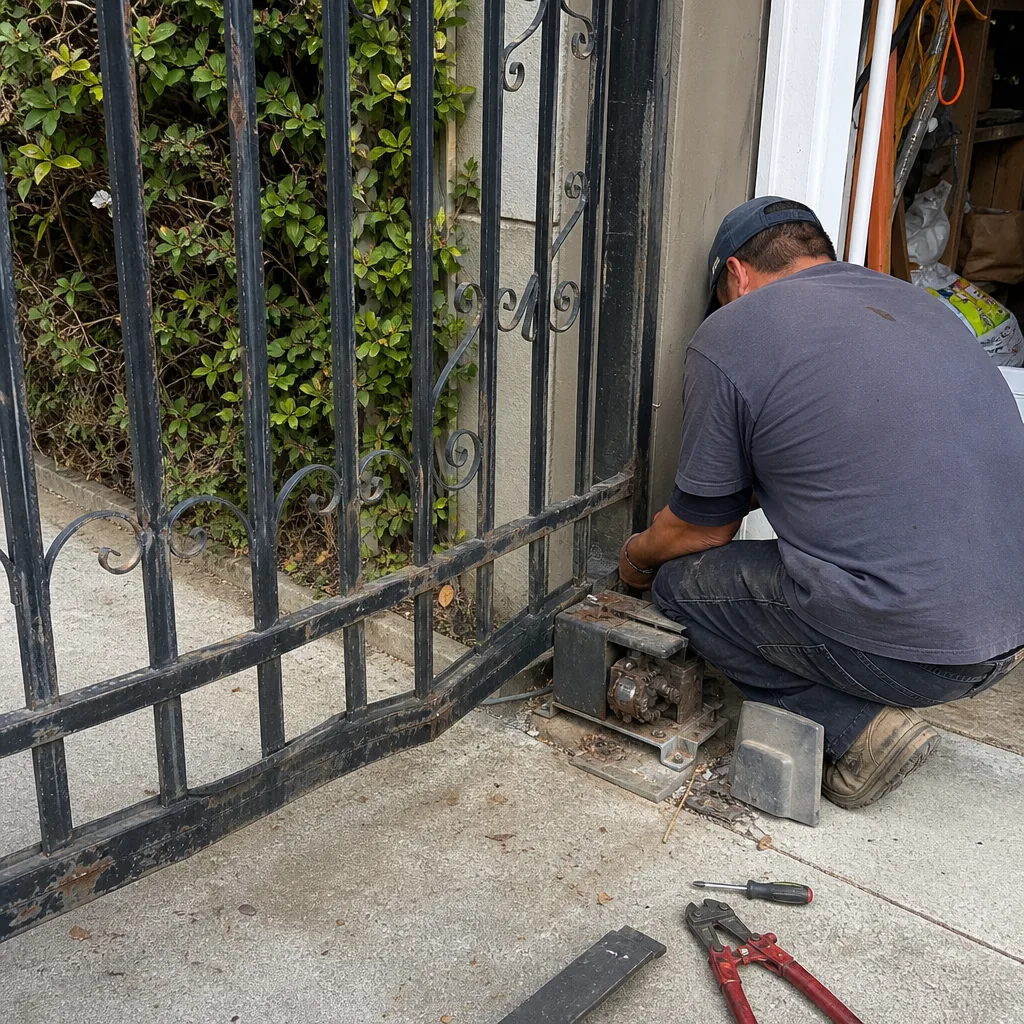 Before
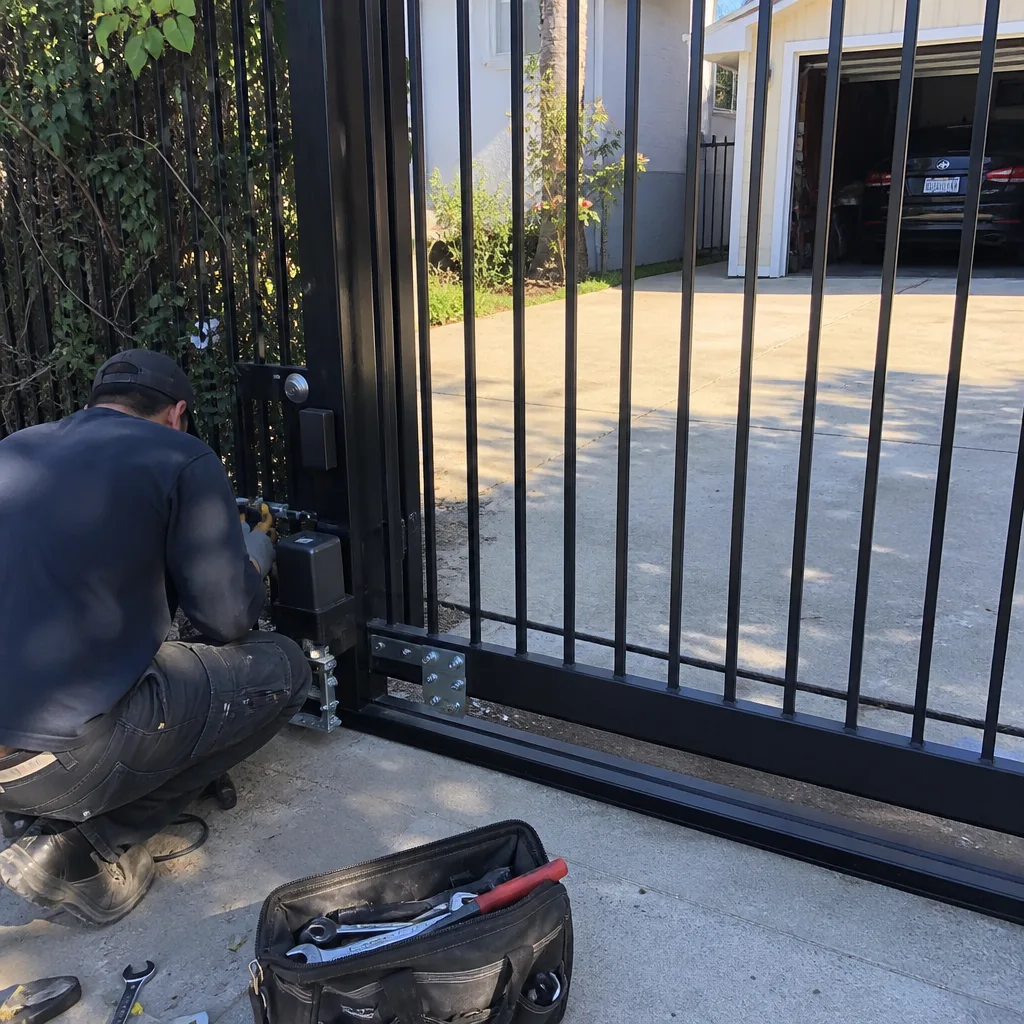 After
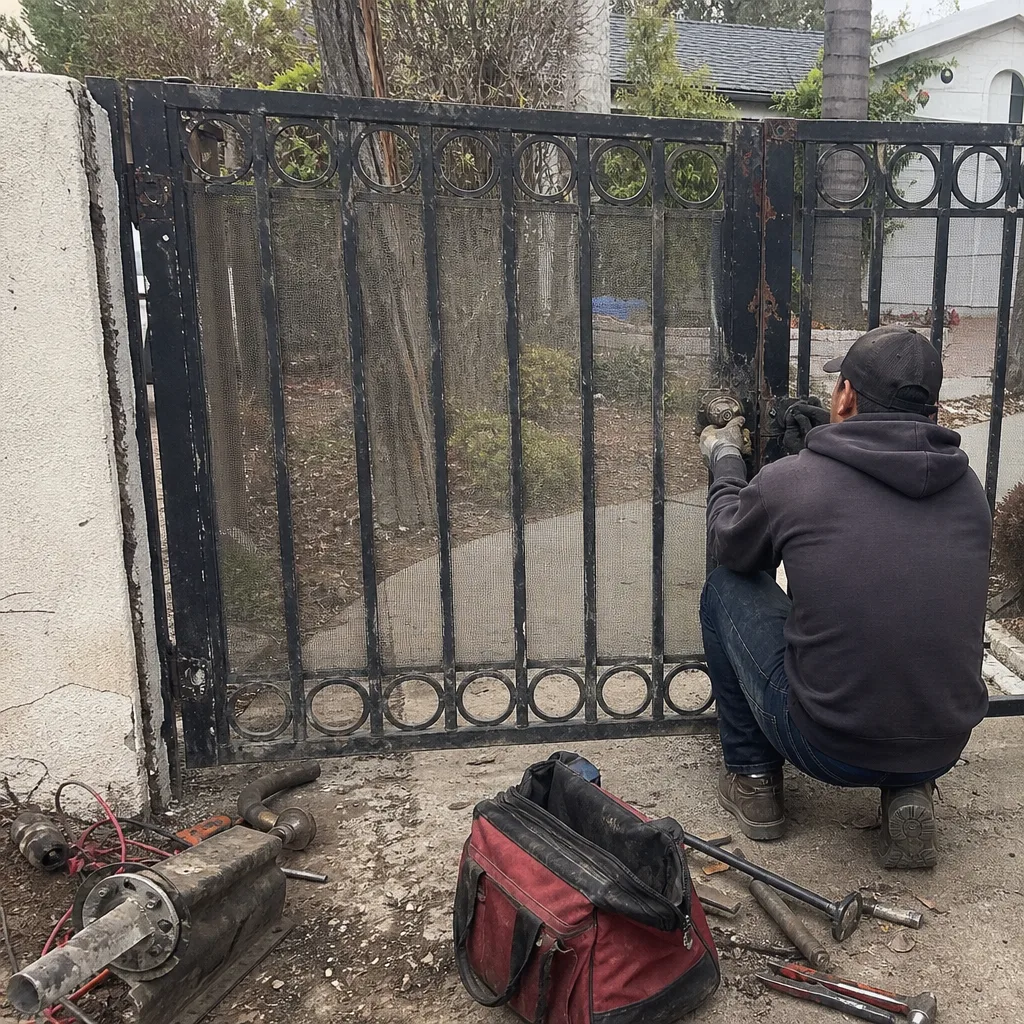 Before
 After
 Before
 After