
Last updated November 2, 2026
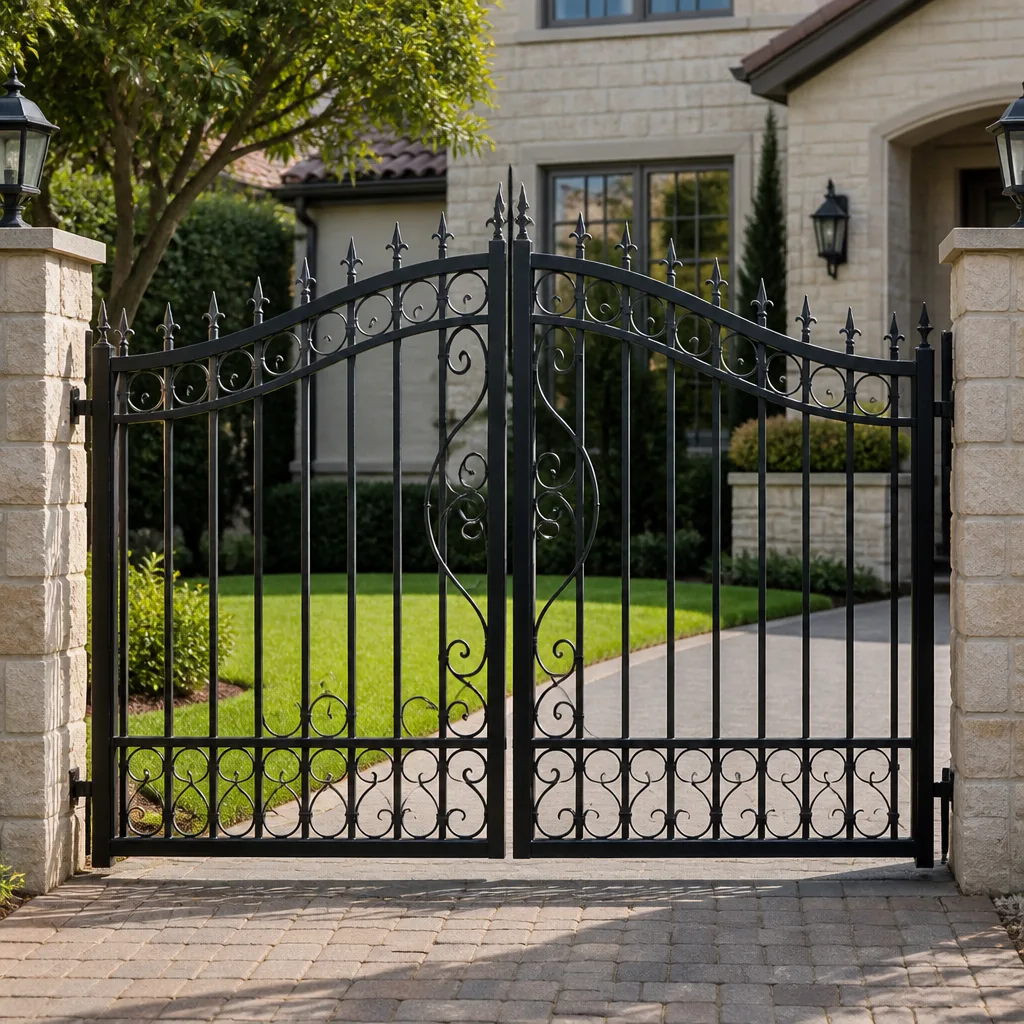 Wrought iron
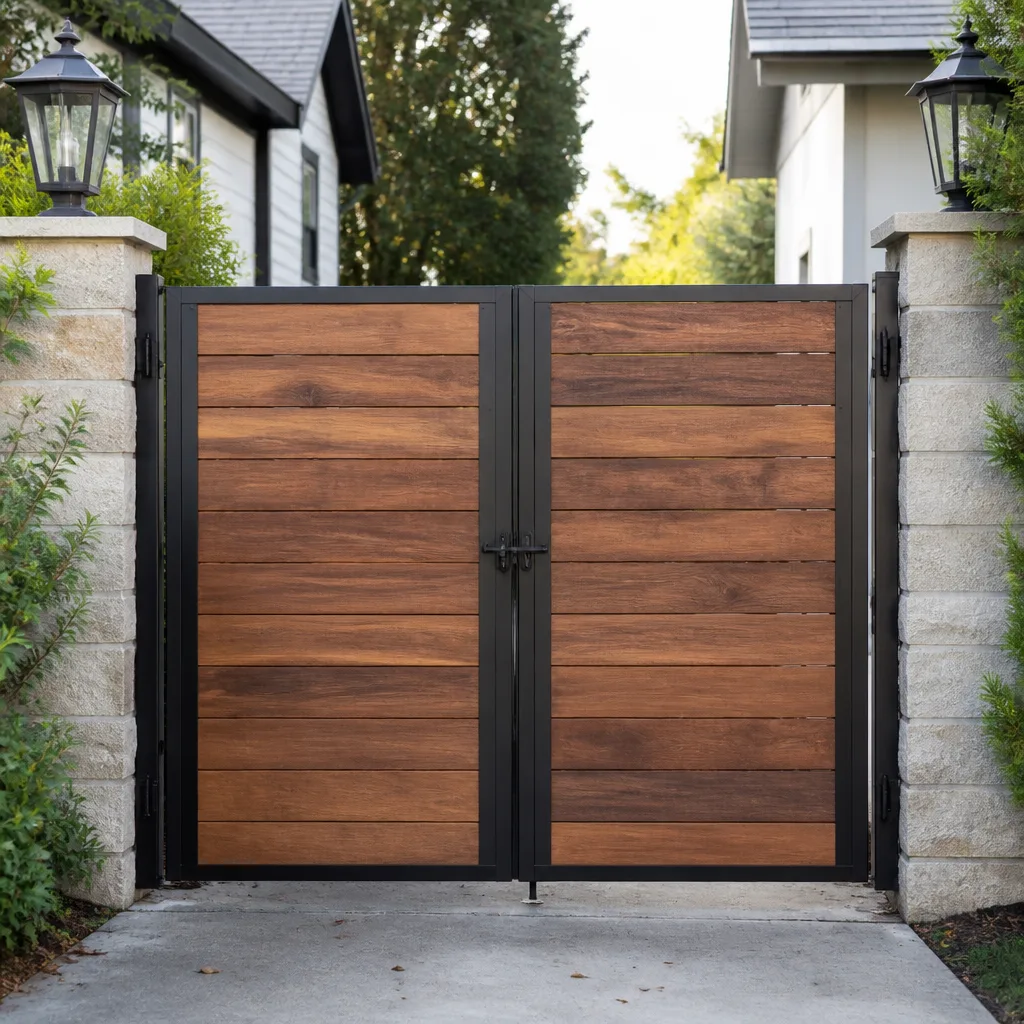 Wood & steel frame
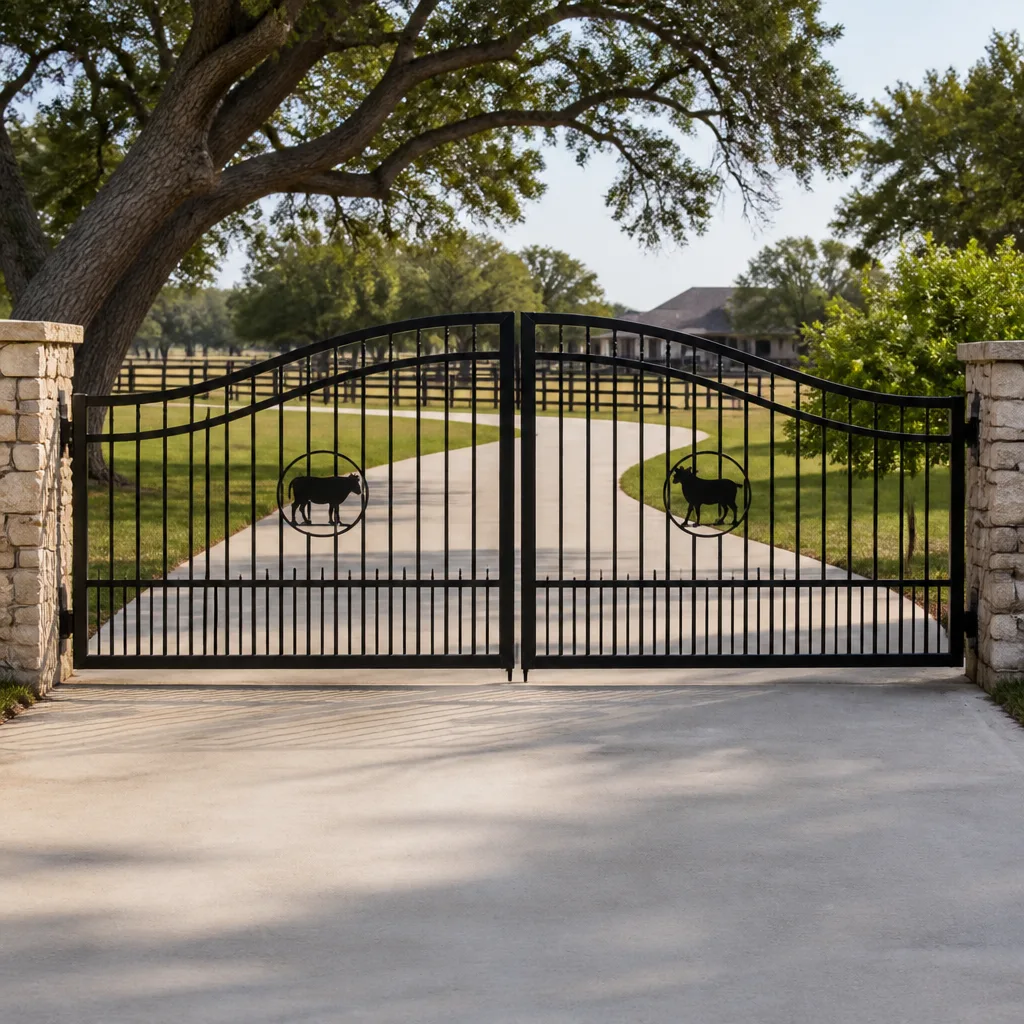 Farm & ranch
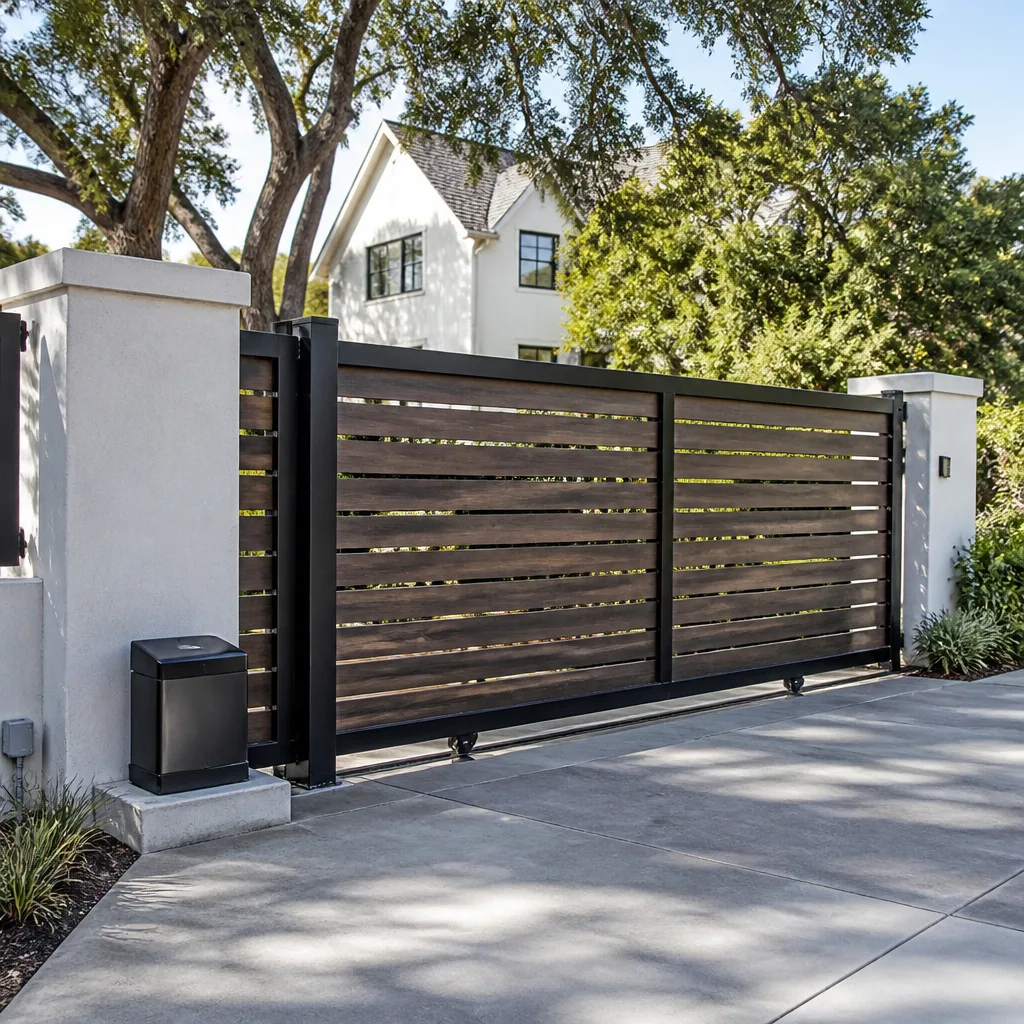 Sliding driveway gates
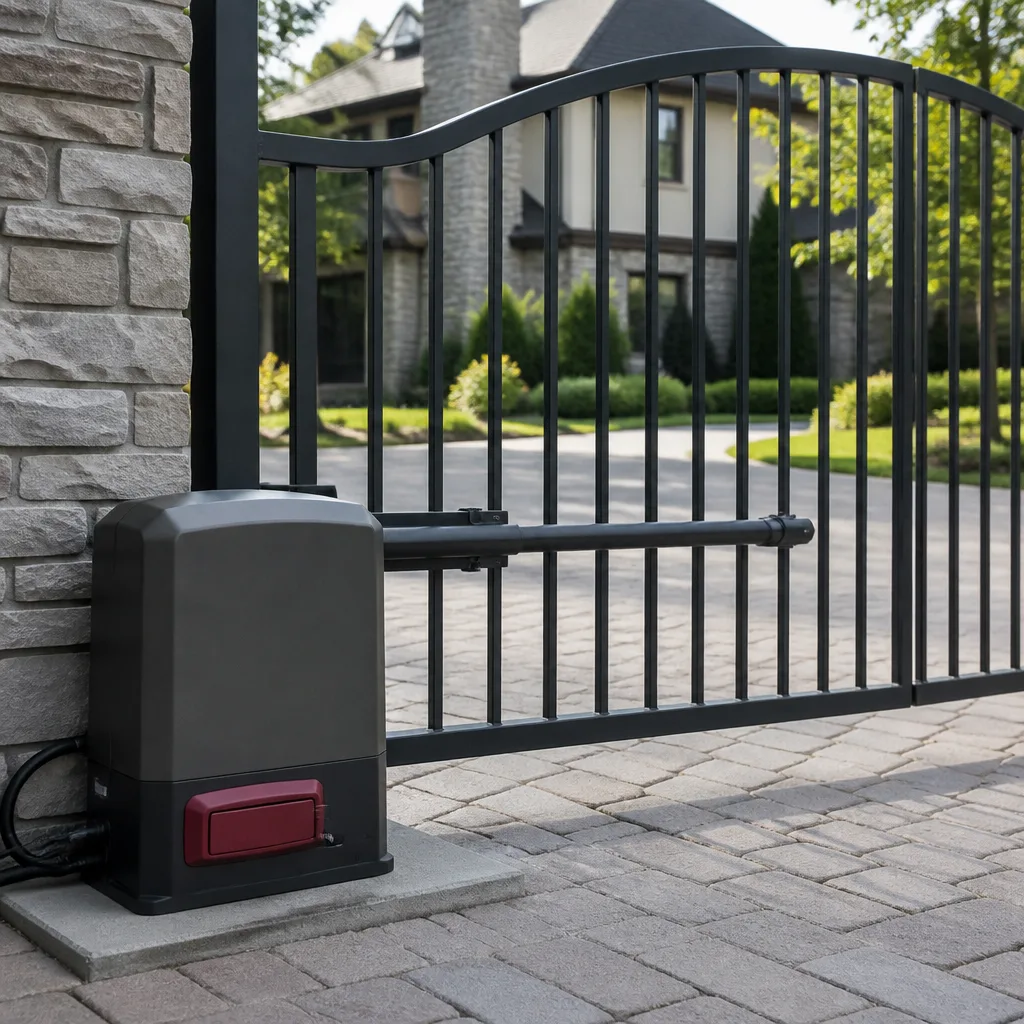 LiftMaster operators
Free on-site gate assessment - hinges, posts, and your LiftMaster or Nice gate operator checked before anything is quoted
The assessment is free and the quote is the invoice.
Get your free estimateGate Repair Warning Signs: A Hyde Park South Homeowner’s Reference Guide
Most gate failures aren’t sudden. They’re slow-motion breakdowns that send clear signals for weeks or months before the gate finally stops moving. The problem is that a two-second hesitation sounds like nothing, a faint hum sounds like weather, and a slight sag looks like character. But here’s the counterintuitive part: almost every gate failure we see in Hyde Park South gives at least three warning signs before it quits. The homeowner who knows which signs mean a $40 fix and which mean a $1,200 motor replacement is the homeowner who never gets locked out of their own driveway at 7 a.m. on a Monday. This guide assigns a specific urgency tier and dollar range to each warning sign, so you know exactly when to act and when to wait.
Read this guide and you’ll learn to read your gate the way a technician does: by ear, by eye, and by response time. We’ll cover sound diagnostics, rust interpretation, electrical red flags non-electricians can safely identify, and the hidden damage a vehicle strike leaves behind that no one thinks to check. By the end, you’ll know which three sounds mean pick up the phone today, and which one sound means buy a can of lubricant this weekend.
Quick Answer
Most gate failures in Hyde Park South give three or more warning signs before the gate stops working. The most common are: a gate that hesitates or moves slower than normal (capacitor degradation, a $15 – $40 part if caught early), a grinding or metallic scraping sound during travel (dry rack or chain, a $75 – $150 lubrication and adjustment service), and a gate that reverses for no reason or won’t respond to the remote the first time (photo eye misalignment or control board fault, $90 – $400 depending on the part). If your gate makes any new sound or changes speed, note it, rank it using the tiers below, and call Gate Repair in Hyde Park South before a Green-tier issue becomes a Red-tier motor replacement.
Styles & brands we work with
- Wrought iron
- Wood & steel frame
- Farm & ranch
- Sliding driveway gates
- LiftMaster operators
Table of Contents
- The Three Urgency Tiers: Green, Yellow, Red
- Sound Diagnostics: What Your Gate Is Telling You
- How to Read Rust on a Steel Gate
- Electrical Warning Signs You Can Safely Identify
- Vehicle Strike Damage: The 6 – 18 Month Time Bomb
- Brand-Specific Warning Signs (FAAC, BFT, Linear, Viking)
- Common Mistakes to Avoid
- When to Call a Professional
The Three Urgency Tiers: Green, Yellow, Red
Not every gate warning sign deserves the same reaction. The homeowner who treats every squeak like an emergency ends up paying for service calls they didn’t need. The homeowner who treats every warning like nothing ends up buying a new motor. The fix is a simple triage system we use on every gate we inspect in Hyde Park South. Assign your symptom to a tier, then act accordingly.
Green Tier: Monitor (No Immediate Action Required)
Green-tier signs are normal wear indicators. They don’t mean your gate is failing. They mean your gate is aging the way gates age. You should note them and keep an eye on them, but you don’t need to schedule a service call yet.
- Light surface rust at weld points or bolt heads – cosmetic for now. Check it every few months. If it spreads or flakes, it moves to Yellow.
- A single squeak at one specific point in the travel arc – often a dry hinge pin or a bolt that’s loosened slightly. A $10 can of lithium grease often resolves it. If the squeak persists after lubrication, it’s a bearing starting to go, and that’s Yellow.
- Remote range that’s slightly shorter than last year – antenna position, battery age, or minor interference. New remote batteries cost $5 – $10. If new batteries don’t help, it’s Yellow.
- Gate closes 1 – 2 inches short of the stop – limit switch drift. On most brands this is a 10-minute adjustment. Left alone for a year, it becomes a motor straining against the stop, and that’s Red.
- Faint humming when the gate is idle – some control boards hum at barely audible levels and that’s normal. If the hum gets louder over weeks, revisit this list.
Action: Note the symptom, date it, and check again in 30 days. If it’s the same, you’re fine. If it’s worse, move it up a tier.
Yellow Tier: Schedule Within 30 Days
Yellow-tier signs mean a component is degrading and will fail, but it hasn’t failed yet. This is the sweet spot for repair economics. A Yellow-tier repair typically costs $75 – $250. The same component, left until it fails completely, costs $350 – $1,200 because the failure usually takes something else with it.
- Gate hesitates 2 – 5 seconds before moving after the remote is pressed – capacitor degradation on the motor start circuit. The capacitor is a $15 – $40 part. Wait 60 days and the motor burns out trying to start without it. That’s a $450+ motor replacement.
- Gate moves noticeably slower than it did six months ago – on hydraulic systems, low fluid or a failing pump seal. On electromechanical systems, worn gears or a straining motor. Both are cheaper to address before the unit overheats.
- Squealing or screeching during the entire travel, not just one point – bearing failure or a bent roller. The bearing is a $20 – $60 part. The damage a failed bearing does to the track and wheel is $300+.
- Gate reverses midway for no reason – photo eye misalignment, low battery in a wireless edge sensor, or a control board that’s losing its settings. Intermittent reversal is often a $90 – $150 fix. Constant reversal is closer to $300 – $400.
- Rust that flakes when you wipe it – structural rust has started. On a steel gate, this needs wire-brushing, rust converter, and re-coating before it eats through the tubing.
- Keypad works, but only if you press the buttons hard or multiple times – keypad membrane is wearing. A replacement keypad runs $40 – $120 depending on brand. A keypad that fails entirely on a Friday night means you’re climbing over the gate, which is its own problem.
Action: Call a gate technician this month. In Hyde Park South, the wait for a non-emergency appointment is usually short, and the repair cost is a fraction of what an emergency call costs after full failure.
Red Tier: Same-Week Repair
Red-tier signs mean failure is imminent, or the gate has already partially failed and the remaining function is masking the damage. Waiting on a Red-tier sign turns a repair into a replacement.
- Gate makes a grinding sound every time it moves – metal-on-metal contact. On a rack-and-pinion system, the rack is dry or misaligned and the pinion gear is eating it. On a chain-drive, the chain is dragging. Every cycle shaves metal off both parts.
- Gate slams at the end of travel instead of slowing down – the limit switch or soft-stop circuitry has failed. A slamming gate is shock-loading every weld, bolt, and hinge on the gate. Weld cracks follow within weeks.
- Gate won’t open from the remote but opens fine from the keypad – receiver board failure. The receiver is a $150 – $300 part. But if the board shorts out while you’re waiting, it can take the main control board with it, and that’s $600 – $900.
- Burning smell, visible smoke, or a hot motor housing after the gate cycles – the motor is overheating. This is a fire hazard and a motor failure in progress. Cut power to the gate and call a professional. Same-day or next-day.
- Gate starts moving, then stops and reverses without touching anything – safety loop detector erratic behavior, a failing photo eye, or a control board that’s no longer reading inputs correctly. A gate that reverses unpredictably is a safety risk for anyone or anything in the path.
- You can see the gate wobble or lift during travel that wasn’t there before – a hinge pin has sheared, a wheel has broken, or the post has shifted. The gate is now operating on partial support. It can drop.
Action: Stop using the gate if possible. If you can’t stop using it, use it as little as possible and keep people and pets clear of the path. Call a gate specialist in Hyde Park South today. Red-tier repairs are usually same-week, and waiting only inflates the invoice.
Sound Diagnostics: What Your Gate Is Telling You
Your gate speaks in a specific vocabulary. The difference between a $40 lubrication service and a $900 board replacement is often just the character of the sound. Here are the four most common gate sounds we hear in Hyde Park South, and what each one means.
- The Grind (metal-on-metal scrape or crunch): This is almost always a dry or misaligned rack and pinion gear, or a dry chain on chain-drive systems. The rack is a long metal track with teeth, bolted to the gate. The pinion is the gear on the motor that engages those teeth. When lubrication fails or the rack shifts slightly, the two surfaces grind against each other. Every cycle wears both surfaces down. Caught early, this is a cleanup, realignment, and re-lubrication job – $75 – $150 in Hyde Park South, including the service call. Caught late, the rack and pinion both need replacement, and on some models that means pulling the motor, which pushes the bill to $500 – $800.
- The Click-Click-Click (rapid relay clicking when you press the remote): A single click, then nothing, means the control board is receiving the signal but failing to send power to the motor. The relay itself may be failing, or the board is locking out due to a fault code. On many boards, a failing relay is a $40 – $90 component-level repair if the technician can source the part. If the board is damaged beyond that, it’s a replacement, and that runs $250 – $600 depending on the brand. Do not keep pressing the remote. Repeated clicks with no action can burn out other components on the board.
- The Squeal (high-pitched metallic shriek, constant while moving): This is bearing failure. Gate bearings sit in the hinge housings and the wheel assemblies. When they dry out or wear, the balls inside the bearing race scrape instead of roll. A squealing bearing is already damaged. Lubricant won’t reverse it. The fix is bearing replacement – typically $30 – $80 per bearing including labor, but if the worn bearing has allowed the wheel or hinge to wobble, the track or hinge plate may now be ovaled, and that’s additional metal work. One squealing bearing left alone becomes two, because the gate shifts and loads the adjacent bearings unevenly.
- The Chatter (motor stutters or buzzes before moving): A chattering or buzzing motor that eventually starts moving is the classic sign of a dying start capacitor. The capacitor is the little cylinder that gives the motor its initial jolt of power to overcome inertia. When it starts to fail, the motor gets a weak, stuttering start. Each chattering start draws high current and heats the motor windings. The capacitor is $15 – $40. The motor is $350 – $650 on most residential models. The math is simple: if your gate chatters for even two seconds before moving, call before the next 50 cycles burn out the motor.
One more sound worth naming: a soft thunk at the moment the gate stops, like something heavy settling. That’s usually a slack chain or a loose rack section, and it’s a Green-Yellow borderline issue. Check it, but don’t panic. Electric Gate Repair in Hyde Park South starts with a sound-based diagnostic on every service call, because the sound usually tells us the part before we open the housing.
How to Read Rust on a Steel Gate
Steel gates rust. That’s not a defect. The question is whether the rust is cosmetic or structural, and the difference is readable if you know what to look for. Hyde Park South’s coastal air and seasonal rain cycles make rust progression faster here than in drier inland areas, so reading rust patterns is a skill worth having.
Surface Oxidation (Green Tier)
Surface oxidation looks like a dusty orange or brown film, usually concentrated around bolt heads, weld beads, and spots where the powder coat or paint has been chipped. When you wipe it with a finger, it leaves a fine powder but the metal underneath is still smooth and solid. This is cosmetic. Treat it with a wire brush, a rust converter, and a touch-up coating. On a gate in Hyde Park South, this kind of rust can sit for years without becoming a problem – unless it’s near the bottom rail, where water pools after rain. Keep an eye on any rust that forms within six inches of the ground.
Structural Rust (Yellow Tier)
Structural rust is rust that has eaten into the metal. It looks raised, blistered, or flaky. When you knock on it with a screwdriver handle, it sounds dull or crumbles. You may see a small hole when the flakes fall off. On a steel gate, structural rust at a weld joint means the weld is weakening. On a bottom rail, it means water has been sitting inside the tubing. This is Yellow tier: schedule rust remediation within 30 days. The repair involves grinding out the rust, treating the area, and often welding a patch or reinforcing plate. Ignore it and the gate sags, the welds crack, and the gate eventually needs replacement instead of repair. A full custom steel gate for a Hyde Park South driveway runs $2,500 – $8,000, so a $200 – $400 rust remediation is the cheapest money you’ll spend on that gate all year.
Stress Crack Propagation (Red Tier)
Stress cracks look different from rust. They’re thin, dark, often jagged lines that radiate out from a weld point, a hinge, or a dent. They often have a faint orange edge where rust has started in the crack. Stress cracks mean the metal has been flexing beyond its fatigue limit. On a swing gate, they typically start at the top hinge. On a slide gate, they cluster around the wheel brackets. A stress crack is a Red-tier sign – it will grow with every cycle of the gate, and when it reaches critical length the gate can tear or drop. Do not weld a stress crack shut as a permanent fix. The crack will re-form next to the weld because the underlying flex hasn’t been addressed. The proper fix is reinforcing the section, re-aligning the gate so it’s not flexing, and then welding. Call a professional. This is not a weekend DIY job.
Electrical Warning Signs You Can Safely Identify
You don’t need a multimeter to spot most electrical gate warning signs. You need to know what normal looks like, then notice when it changes. Here are the electrical symptoms a homeowner in Hyde Park South can safely identify without opening any panel or touching any wiring. If you ever see scorch marks, smell burning, or find a panel that’s hot to the touch, cut power at the breaker and call a professional immediately. Do not open the panel yourself.
- Slow response time: A healthy gate starts moving within half a second of the remote press or keypad entry. If the gate now takes two seconds, three seconds, or sometimes doesn’t respond at all on the first press, something in the signal chain is degrading. The most common causes are: a weakening remote battery ($5), a failing receiver board ($150 – $300), or a capacitor that’s struggling to start the motor ($15 – $40). The symptom looks identical for all three, which is why you call a technician who can isolate the fault in ten minutes instead of guessing.
- Erratic loop detector behavior: On automatic gates with vehicle loops (the wires buried in the driveway that sense your car), a failing loop detector shows up as the gate opening when nothing is there, or failing to open when a car is sitting on the loop. It can also cause the gate to close on a car that’s halfway through, because the detector stops reading correctly. Loop detector issues are often caused by water intrusion in the saw cut, a damaged loop wire, or a detector relay going bad. Fixes range from $150 to $500 depending on whether the loop wire itself needs to be re-cut and re-poured.
- Intercom or keypad feedback whine: A high-pitched whine from the intercom speaker or keypad unit usually indicates a ground loop or a failing audio circuit on the control board. On some systems it’s a loose connection. On others it’s a capacitor leaking on the board. Either way, the whine usually gets worse before the unit fails entirely. Intercom and keypad replacements on systems like DoorKing, Viking, and BFT run $250 – $600 installed, so don’t ignore a whine that’s getting louder.
- Gate operates fine from one input but not another: Gate opens from the keypad but not the remote, or opens from the remote but won’t close from the exit loop. This pattern tells you the motor and the gate itself are fine – the problem is isolated to one input circuit. That’s good news, because it means the repair target is a $100 – $300 board or accessory, not a $600 motor. Tell your technician exactly which inputs work and which don’t. That single piece of information often cuts the diagnostic time in half.
If you’re seeing any of these, electric gate troubleshooting is a core part of what we do. And if you’re planning a new gate or motor, gate installation in Hyde Park South done by a technician who understands the full electrical system from the motor to the keypad avoids most of these failures in the first place.
Vehicle Strike Damage: The 6 – 18 Month Time Bomb
Someone backs into a gate. The gate still opens and closes. Everyone breathes a sigh of relief and moves on. Then, six to eighteen months later, the gate starts acting up for no apparent reason. This is one of the most common scenarios we see in Hyde Park South, and it almost always traces back to a vehicle strike the homeowner forgot about. Here’s what vehicle strikes actually break, even when the gate doesn’t look damaged.
The Hidden Damage No One Checks
- Post deflection: A swing gate post that’s been hit takes a lean of one or two degrees – invisible to the naked eye. That lean changes the gate’s entire geometry. The gate now hangs slightly wrong, the hinges load unevenly, and the gate drags at one point in its arc. Over months, the hinge bearings wear, the operator strains, and the gate starts binding. A post that’s been deflected needs to be re-set or reinforced. Ignoring post deflection after a strike is how a $300 repair becomes a $1,500 post and hinge replacement.
- Micro-cracks at weld joints: Vehicle strikes cause impact loads that propagate as hairline cracks through weld joints, especially at the hinge side and the latch side. These cracks are often invisible without close inspection. They grow with every gate cycle because the gate is now flexing at the crack point. A technician who inspects after a strike can catch these early and weld-reinforce them for under $200.
- Operator mount bolts loosened: The shock of the impact travels through the gate into the operator mount. Bolts that were torqued to spec are now slightly loose. The operator starts to vibrate during operation, which increases wear on every internal component. Re-torquing bolts is a $50 service call. Replacing an operator that vibrated itself to death is $500 – $900.
- Loop detector wire damage: The vehicle that hit the gate often drives over the loop wires in the driveway during the incident, or the impact jolts the loop detector connection. A hairline break in the loop wire causes erratic behavior that shows up months later. Loop wire repair requires re-cutting the asphalt or concrete and re-pulling the wire, typically $400 – $800 in Hyde Park South.
- Control board solder joint fractures: Heavy impacts can crack solder joints on the control board, even if the board’s housing wasn’t touched. These micro-fractures cause intermittent electrical faults that are notoriously hard to diagnose because the board works fine one minute and fails the next. Board replacement is the usual fix, $250 – $600.
What to Do After a Vehicle Strike
- Take photos of the gate and the area around the posts, even if it looks fine.
- Test the gate through a full open and close cycle. Listen for any new sounds.
- Visually inspect the posts, hinges, and operator mount bolts. Look for fresh paint chips, shifted metal, or new gaps.
- If anything looks or sounds even slightly different, call a gate specialist for a post-strike inspection. This is a $75 – $150 service call in Hyde Park South.
- Do not assume the gate is fine because it cycles. Post-strike damage is progressive.
If the gate was struck hard enough to need repair or replacement, gate installation in Hyde Park South includes structural assessment of the existing posts and foundation before new equipment goes on. Installing a new operator on a compromised post just means the repair call comes back.
Brand-Specific Warning Signs (FAAC, BFT, Linear, Viking)
Every gate brand has its own failure fingerprint. If you know which brand is on your gate, you can often narrow the problem before a technician even arrives. Here are the brand-specific warning signs we see most often on FAAC, BFT, Linear, and Viking systems in Hyde Park South.
FAAC Hydraulic Operators
FAAC systems are workhorses, but they run on hydraulic fluid and that fluid degrades. The most common FAAC warning sign is slow gate travel on cold mornings. Hydraulic fluid thickens as it ages, and on a cold Hyde Park South winter morning the gate moves sluggishly until the fluid warms up. That’s a sign the fluid needs changing. A fluid service on a FAAC system is $150 – $250. Ignore it and the pump seals fail, which is $500 – $800. A second FAAC trait: if the gate creeps backward after reaching the closed position, the hydraulic bypass valve is leaking internally. That’s a rebuild-level issue, not a leak you’ll see on the ground.
BFT Electromechanical Operators
BFT operators tend to communicate their problems through the control board’s LED indicators – but homeowners rarely see those. What you’ll notice instead is the gate stopping at random positions mid-travel, then resuming after a pause. That’s the BFT board detecting an overcurrent condition and tripping its safety lockout. Common causes: a worn capacitor, a dry gear assembly, or a gate that’s binding because a wheel is failing. The board is doing its job. The fix is addressing whatever’s causing the overcurrent. A BFT that stops randomly is usually a $200 – $400 repair. A BFT that hums but won’t move at all is often a failed start capacitor, and that’s the cheapest part on the bill.
Linear Swing Gate Operators
Linear operators are common on residential swing gates, and their most notorious warning sign is the limit switch drift. The gate opens fully, then closes to 90 percent and stops, or opens past the stop and strains against the end. This is a limit adjustment issue on most Linear models, and it’s a 15-minute fix. Left alone, the gate repeatedly slams or strains at the end of travel, which cracks welds and burns out the motor. If your Linear gate is closing short or over-traveling, call while it’s still a $75 adjustment.
Viking Commercial Operators
Viking operators are built for commercial duty cycles, and their warning signs tend to be electrical. The most common one we see in Hyde Park South is a contactor that chatters when the gate is called. That chattering contactor is arcing internally, and every arc burns the contact surfaces a little more. Eventually the contactor welds itself shut, and the gate runs continuously until the thermal overload trips. A contactor replacement on a Viking unit is $120 – $250. If you hear a rapid buzzing or rattling from the operator housing when the gate cycles, that’s the contactor. Catch it before it welds.
Working on the brand you already own is the fastest path to a correct diagnosis. We’re trained on all four of these and more, from residential to commercial. If you’re not sure which brand is on your gate, take a photo of the operator housing and the keypad. The labeling usually tells us everything we need before we even arrive.
Common Mistakes to Avoid
- Lubricating a failing bearing to silence the squeal. A bearing that’s already squealing is damaged. Grease quiets it for a week, then the squeal returns louder. Meanwhile the bearing is wearing out its housing, and now the repair costs three times what it would have when you first heard the sound.
- Ignoring a slow gate because “it still works.” Gate travel speed is a diagnostic metric, not a preference setting. When a hydraulic system slows down, the pump is dying. When an electromechanical system slows down, the motor is overheating or the gears are binding. Slower today means dead next month.
- Replacing the remote batteries and calling it fixed when the gate hesitates. New remote batteries fix a weak remote, not a weak start circuit. If the gate hesitates with fresh batteries, the problem is at the motor or board.
- Welding a stress crack shut without reinforcing the section. The crack is a symptom of flex, not the root cause. Weld over the crack and the metal cracks again next to the weld. The flex must be addressed first: re-align the gate, reinforce the section, then weld.
- Waiting until the gate stops working to schedule a repair. Full failure is the most expensive way to fix a gate. Components take out neighboring components when they die. A failed capacitor takes the motor. A failed bearing takes the track. Every warning sign ignored adds a zero to the invoice.
- Treating every gate brand as interchangeable. A universal workaround on a FAAC system won’t behave the same way on a Viking or BFT. Brand-specific parts and diagnostic knowledge reduce repeat service calls and extend system life. If your technician doesn’t recognize the brand on your gate before opening the panel, that’s a flag.
- Ignoring intermittent behavior because it’s unpredictable. Intermittent faults are the hardest to diagnose and the most dangerous to ignore. A gate that reverses or stops randomly is a safety risk, not just a nuisance. Intermittent today is permanent tomorrow.
When to Call a Professional
Call a professional the moment you spot a Red-tier sign, and ideally before a Yellow-tier sign turns red. Specifically, call if your gate makes any grinding, squealing, or chattering sound, if it hesitates or moves slower than it used to, if it reverses for no reason, if you see rust that flakes, if you find cracks at welds or hinges, or if the gate was hit by a vehicle, no matter how minor the contact looked. Gate systems involve high-tension springs, heavy moving metal, and energized electrical components. A gate panel that malfunctions while you’re working inside it can cause serious injury. Leave panel work to a trained technician.
Gate Repair Hyde Park South offers free estimates in Hyde Park South. Call (877) 752-8839 and describe the symptom you’re seeing. We’ll tell you over the phone whether it sounds like a minor service call or something more involved, and we’ll quote the price before any work starts. Most repairs in Hyde Park South are quoted and agreed up front, so there are no surprises on the invoice.
See the difference
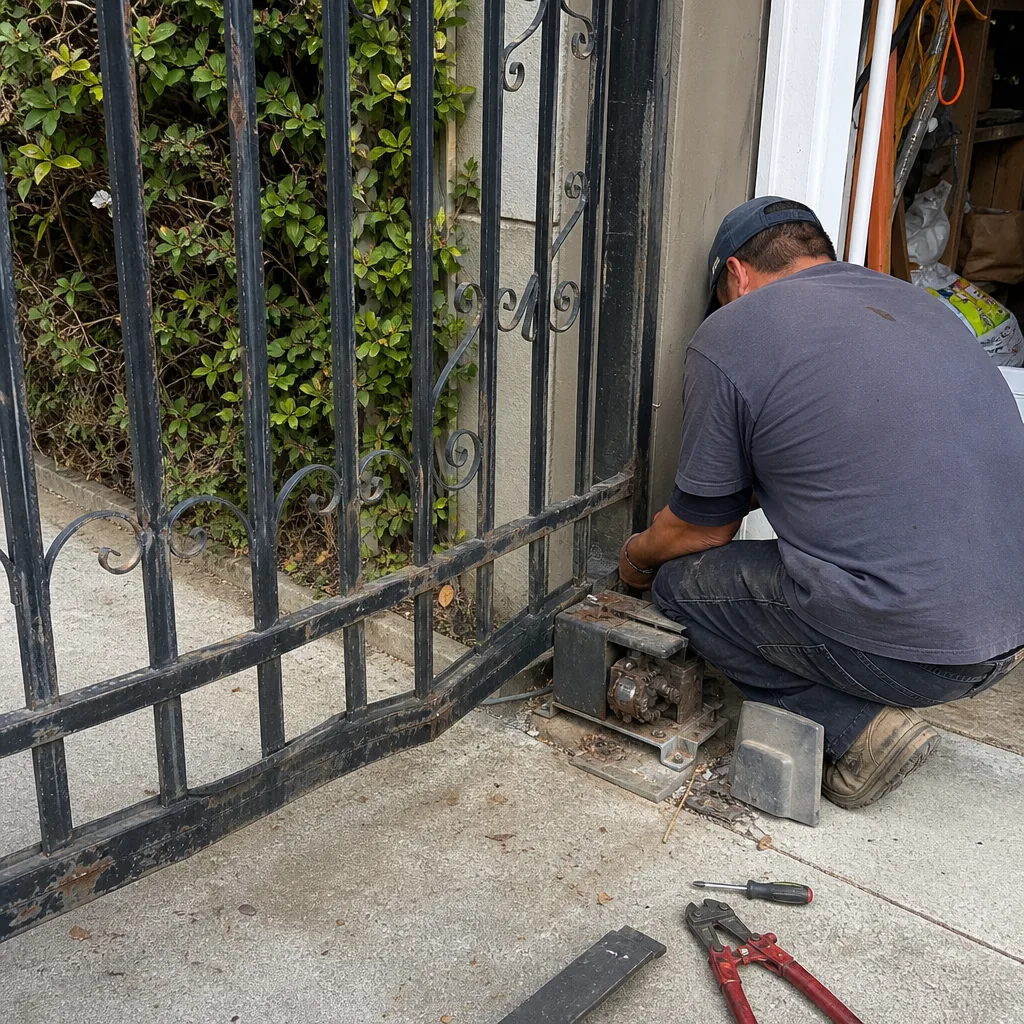 Before
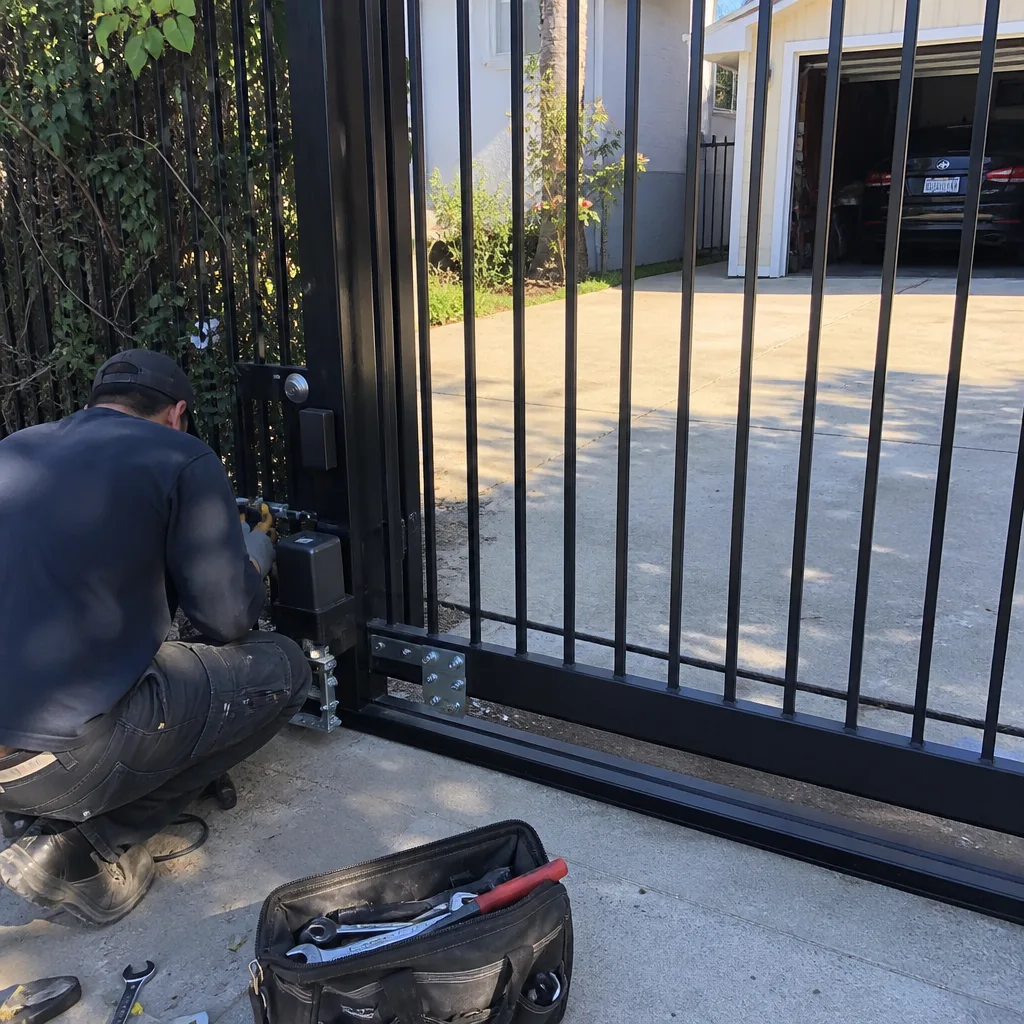 After
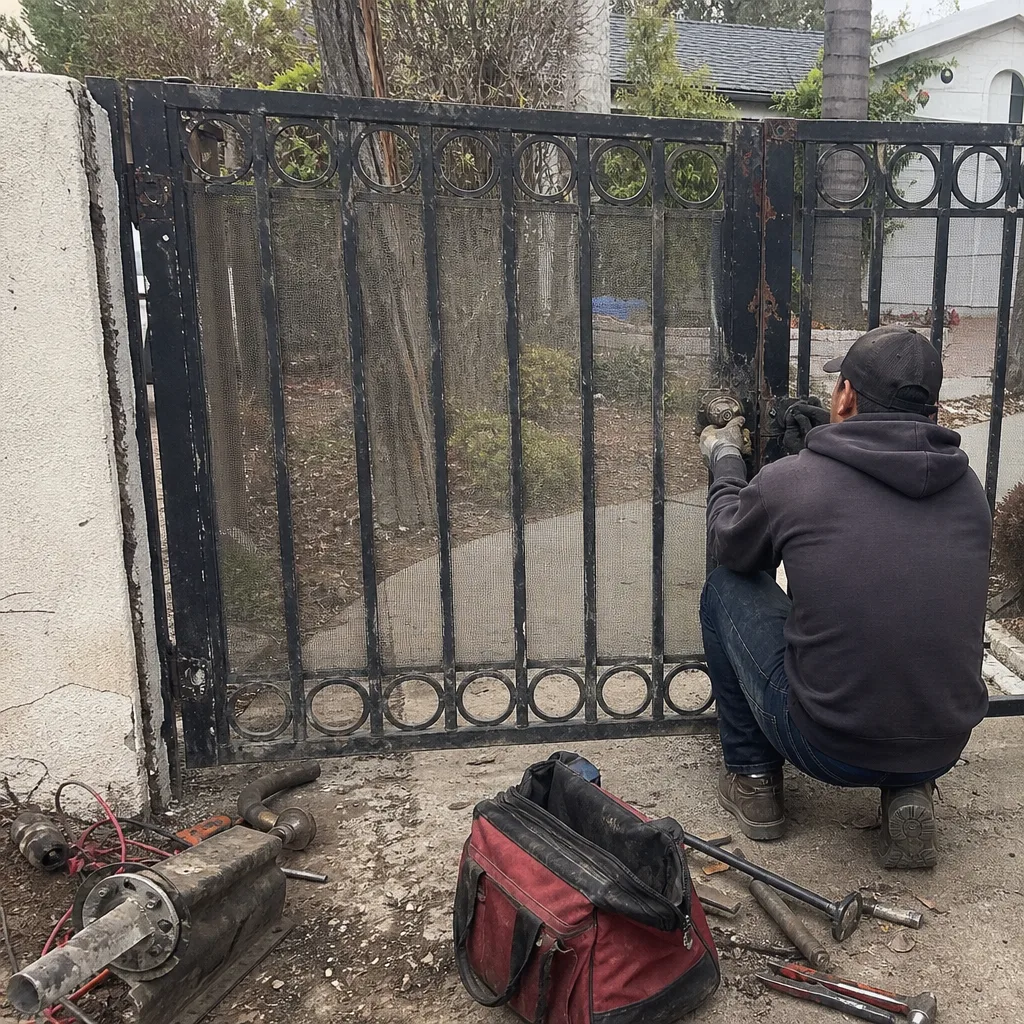 Before
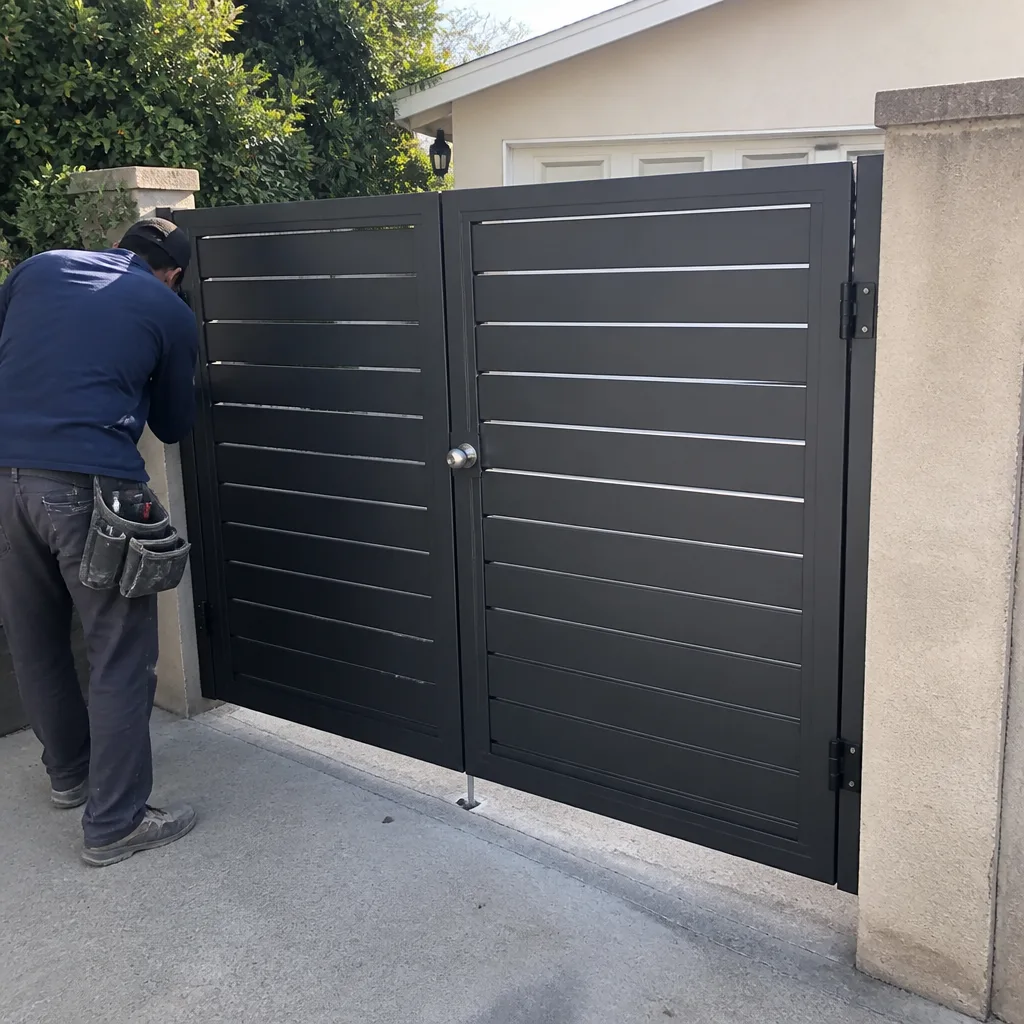 After
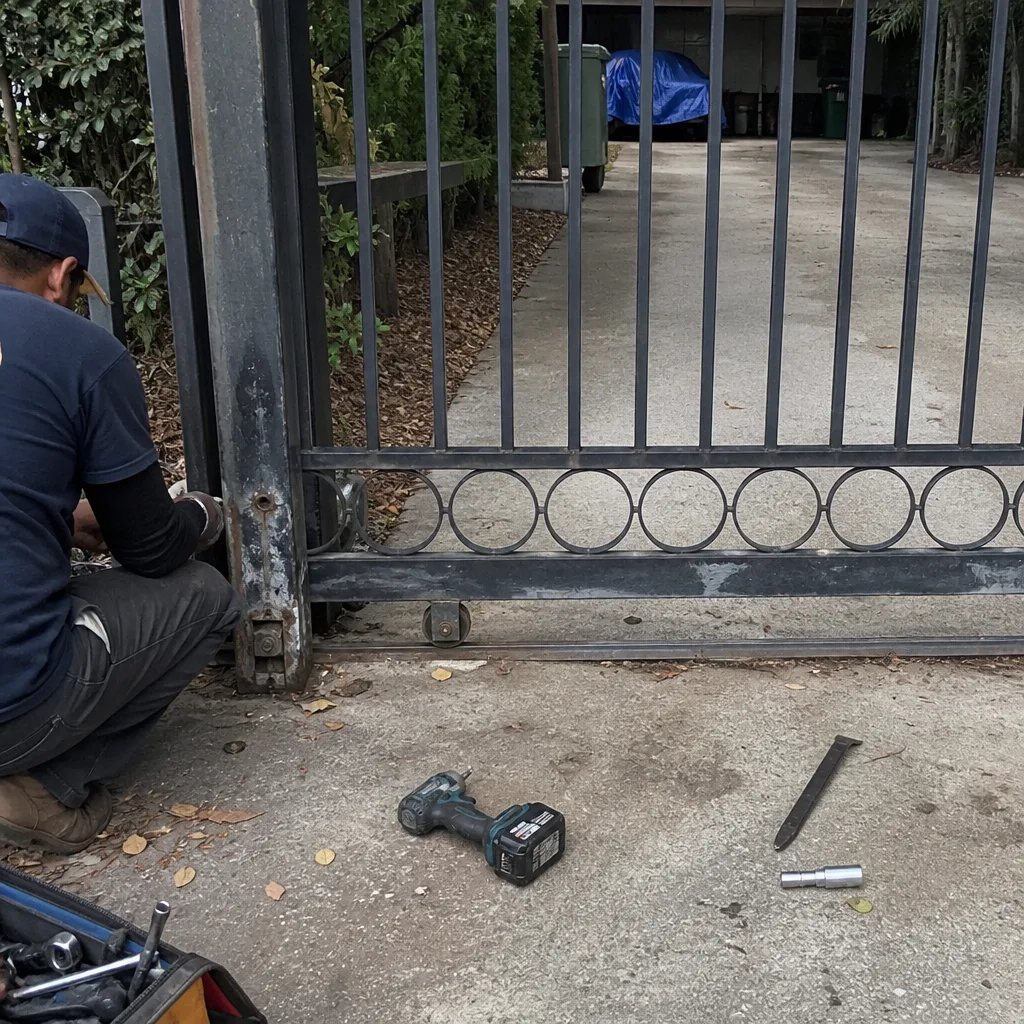 Before
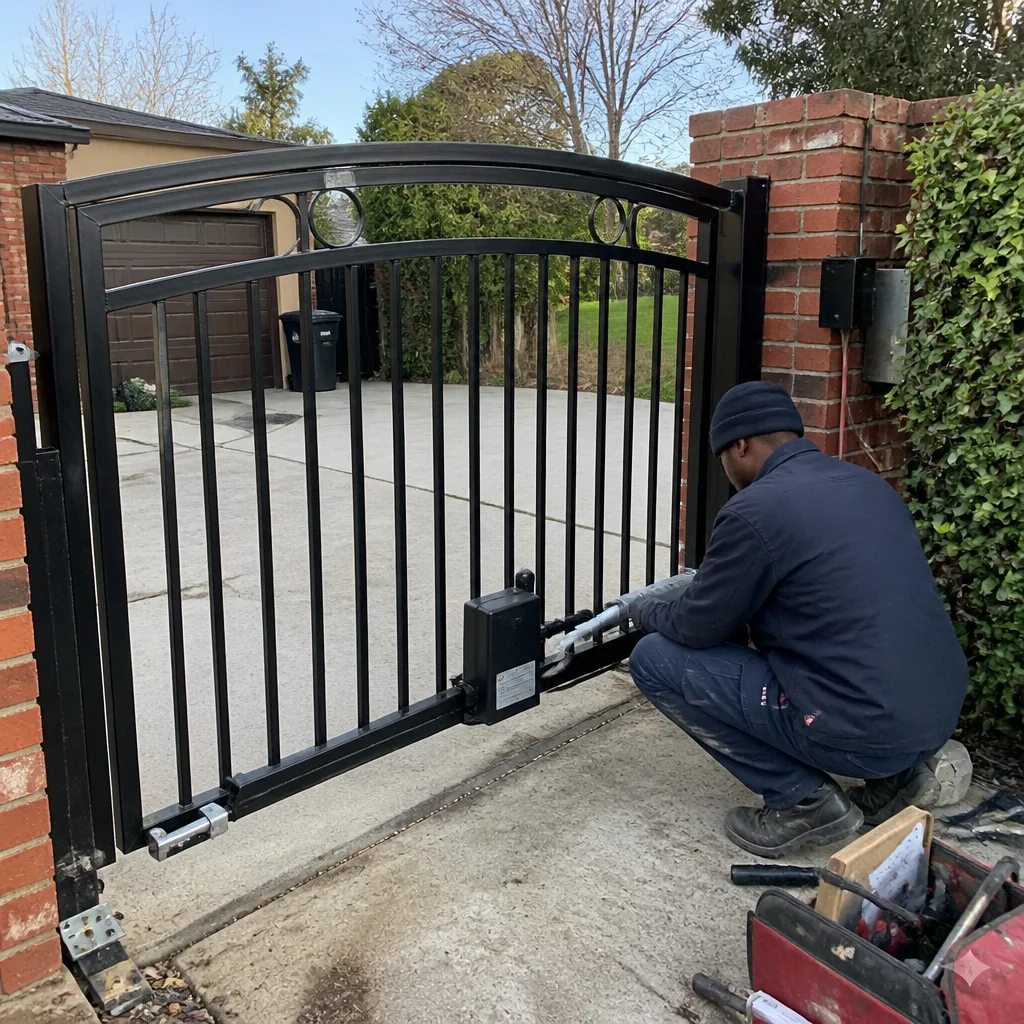 After
Frequently Asked Questions
Most gate repairs in Hyde Park South run between $75 and $400, depending on the component. Minor issues like limit switch adjustments, lubrication, and remote programming sit at the low end. Control board replacements, bearing replacements, and motor work run $250 to $900. Full operator replacements on residential gates typically run $800 to $1,800 installed, depending on brand. Call (877) 752-8839 for an exact quote on your specific system – estimates are free.
A gate that hesitates before moving is usually showing early capacitor failure on the motor start circuit. The capacitor gives the motor its initial burst of power, and when it degrades, the gate stutters or delays before moving. The capacitor is a $15 – $40 part, but if you ignore the hesitation, the motor will burn out trying to start, and that’s a $450+ replacement. Other causes include a failing receiver board or a binding gate. Call us for a diagnosis, and we’ll isolate the exact cause.
Yes, a grinding sound means metal is wearing against metal, and every cycle is removing material from the parts. On rack-and-pinion systems, it’s usually a dry or misaligned rack. On chain-drive systems, it’s a dragging chain. Caught early, this is a $75 – $150 service. Caught late, the rack and pinion both need replacement, which can push the bill past $500. Call (877) 752-8839 as soon as you hear grinding.
For Red-tier failures and emergency situations, we make every effort to get to your Hyde Park South property the same day or the next day. For Yellow-tier issues, we usually schedule within the week. If your gate won’t open at all or is making a grinding or burning sound, call (877) 752-8839 and tell us what’s happening. We’ll fit you in as quickly as possible.
Yes. We’re trained on FAAC, BFT, Linear, Viking, and five other major gate brands. FAAC hydraulic systems have specific failure signs like cold-weather sluggishness, and BFT electromechanical systems often trip their boards on overcurrent faults. Knowing the brand before we arrive cuts diagnostic time and helps us carry the right parts on the truck. Tell us what brand is on your gate when you call.
Our gate installation service includes site assessment, post setting or reinforcement, gate fabrication or ordering, operator installation, safety sensor wiring, keypad and remote programming, limit tuning, and a full test cycle. We handle both the physical gate and the electrical system. The price is quoted and agreed before any work starts. Call (877) 752-8839 for a free measure and written estimate in Hyde Park South.
The Bottom Line
A gate that hesitates, grinds, squeals, chatters, or sags is telling you something specific. The trick is knowing which messages matter and which ones can wait. Most Hyde Park South gate failures give warning signs for weeks or months before they become emergencies. A $15 capacitor caught in the Yellow tier saves a $450 motor. A $75 rack lubrication saves a $500 gear set. A $200 rust remediation saves a $3,000 gate replacement. Learn to read the tiers, learn to listen to the sounds, and learn to act before the gate stops. And when you’re not sure what you’re hearing, call (877) 752-8839 and describe it. We’ll tell you what it means and what it costs to fix. Estimates in Hyde Park South are free, and the price is always agreed before the work begins.
Written by the team at Gate Repair Hyde Park South, serving Hyde Park South since 2015.