
Last updated November 2, 2026
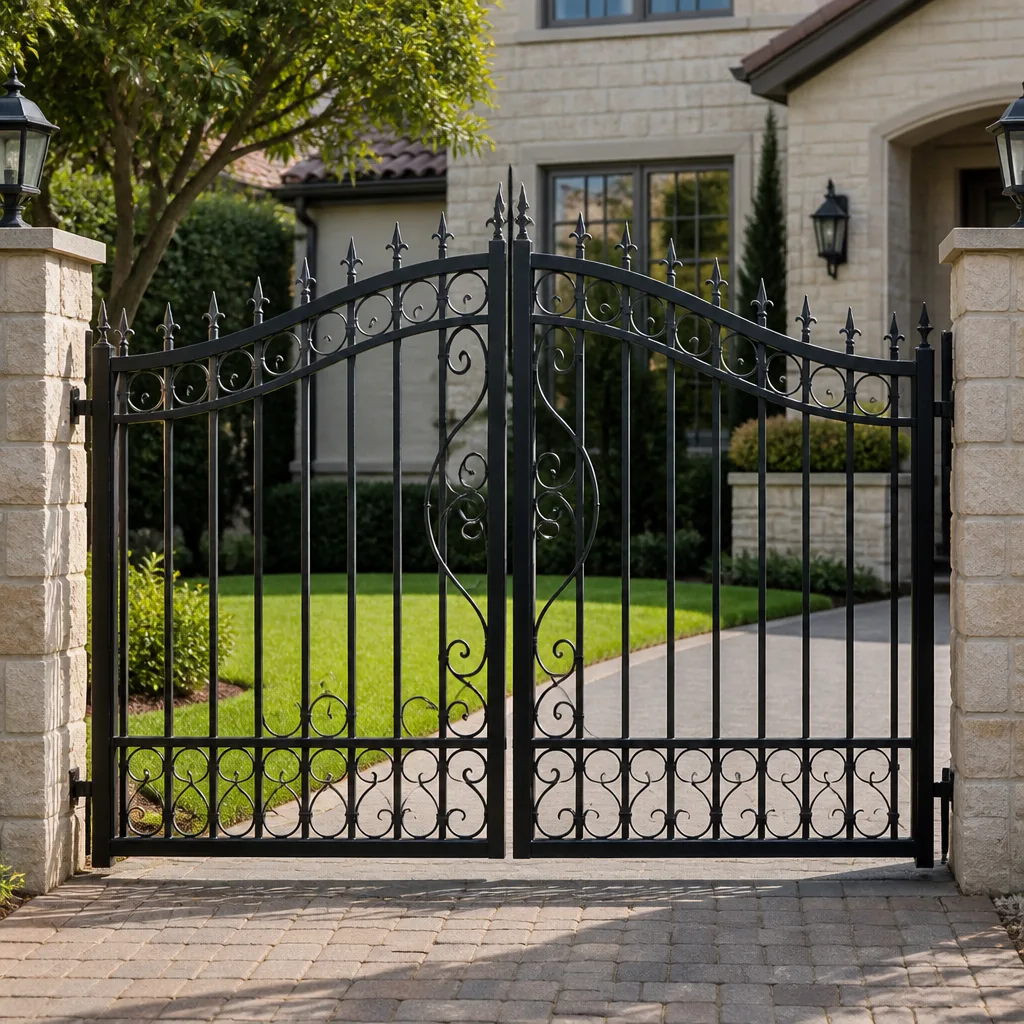 Wrought iron
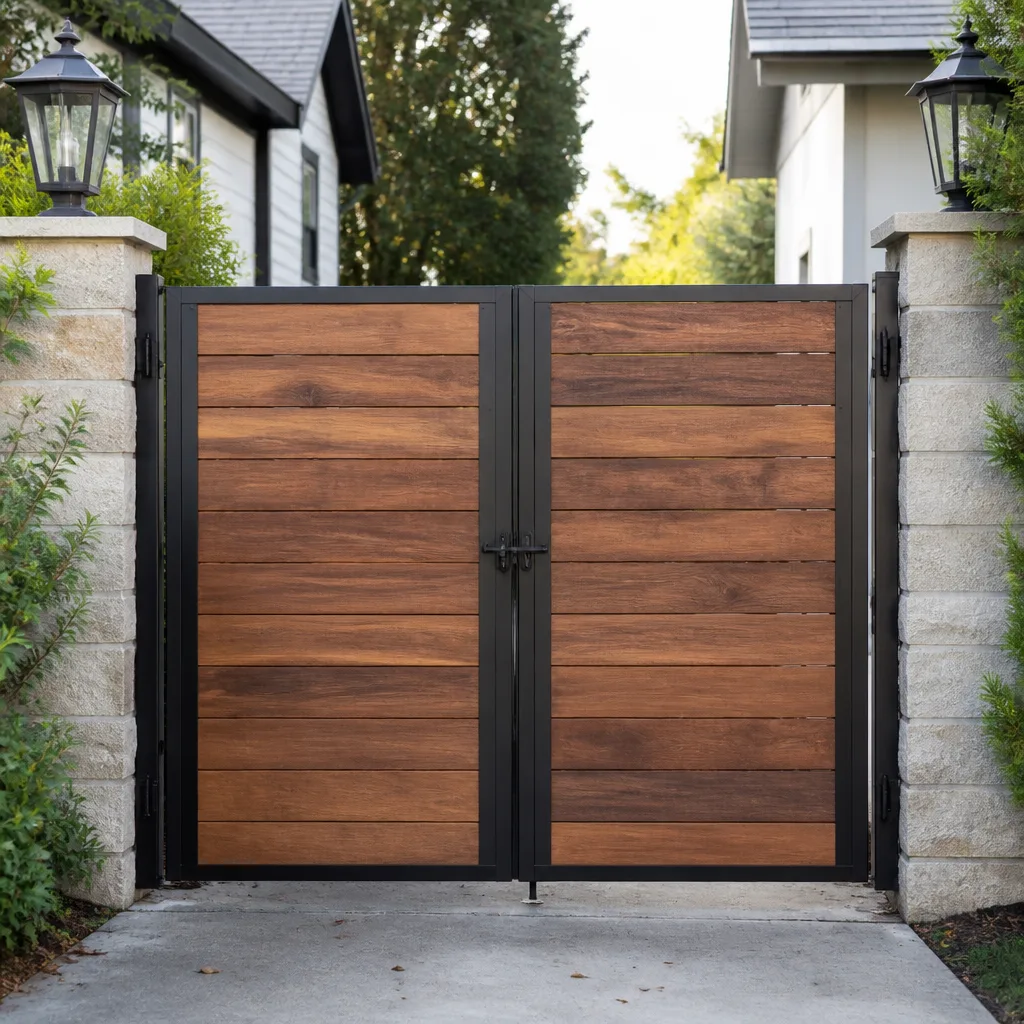 Wood & steel frame
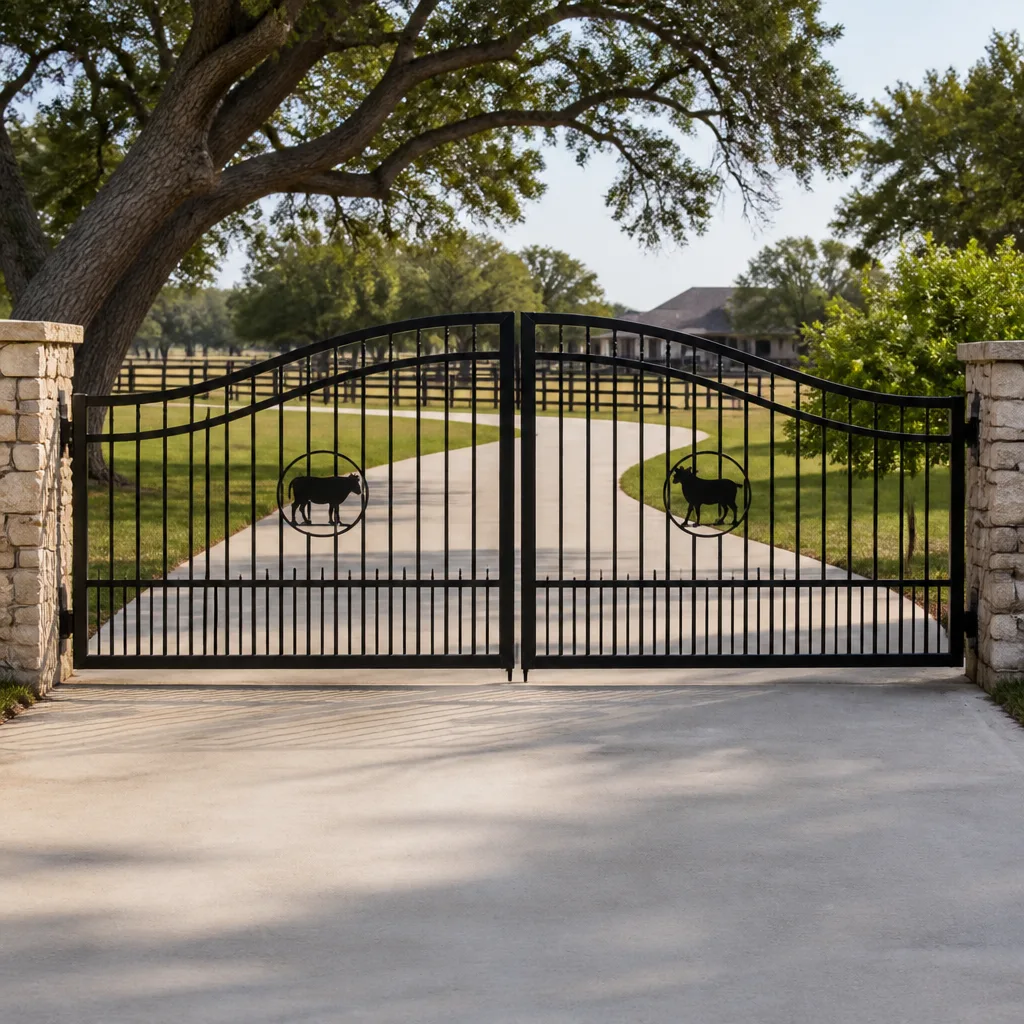 Farm & ranch
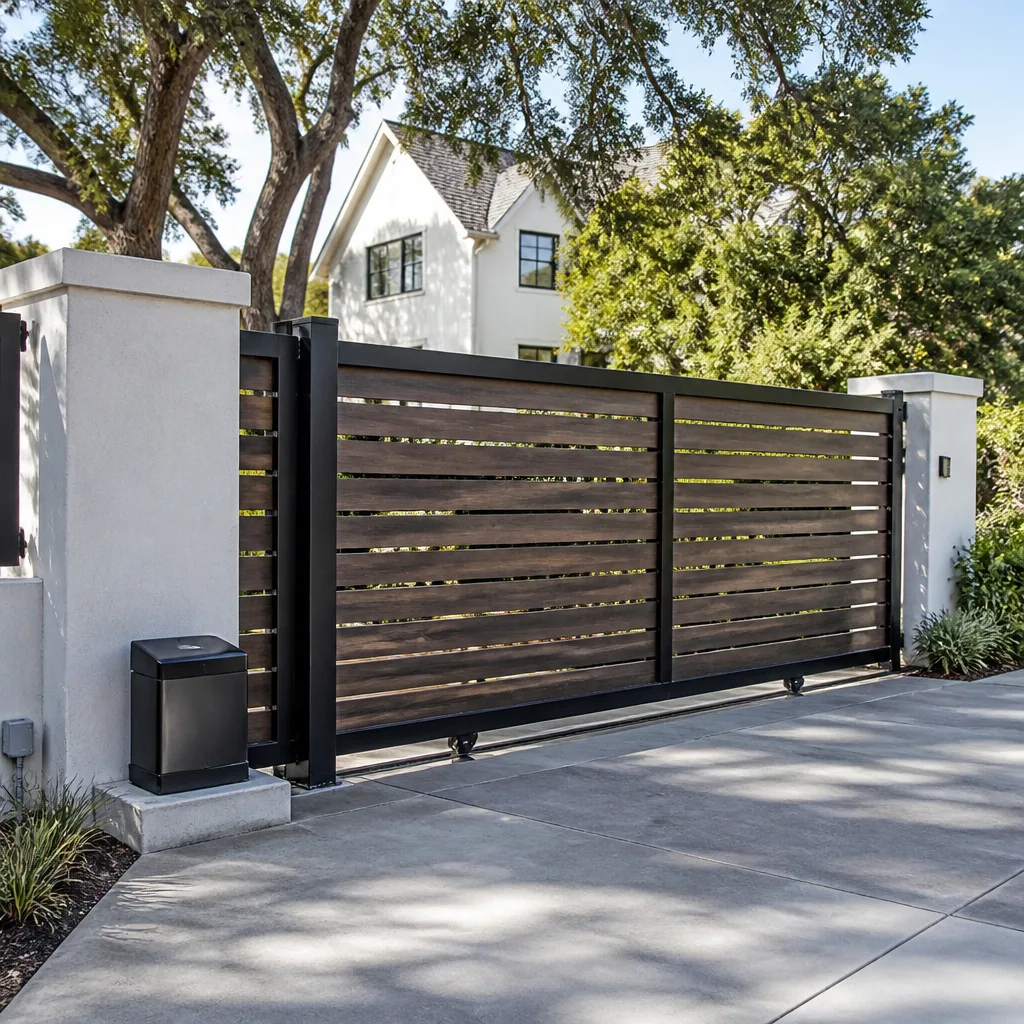 Sliding driveway gates
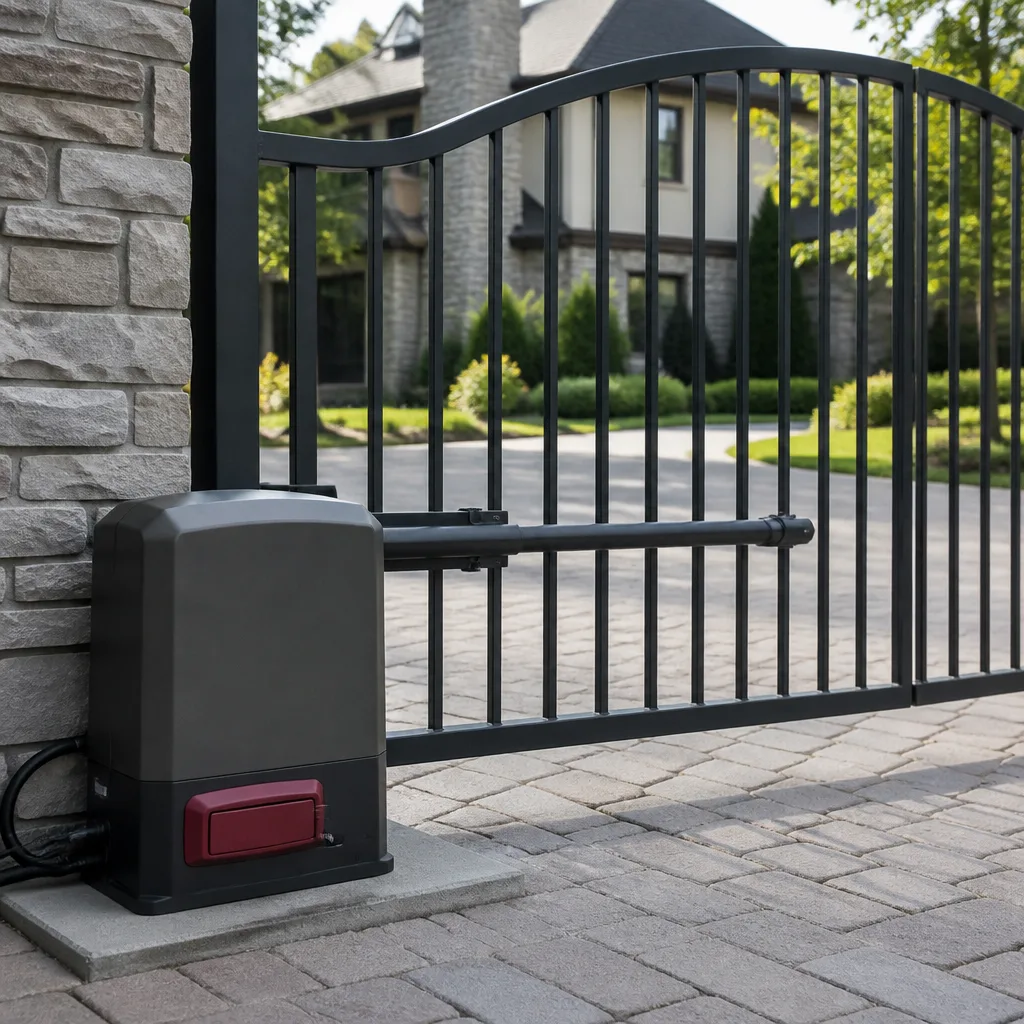 LiftMaster operators
Free on-site gate assessment - hinges, posts, and your LiftMaster or Nice gate operator checked before anything is quoted
The assessment is free and the quote is the invoice.
Get your free estimateGate Repair Maintenance Checklist for Hyde Park South Homeowners
DoorKing recommends re-lubricating the rack gear every six months. Most homeowners do it once, on installation day, then never again. Three years later they’re buying a new rack. This guide isn’t another generic “lubricate and tighten” list. It’s the actual maintenance schedule we use in Hyde Park South, matched to our dry summers, mild winters, and the specific brands we service daily from Mighty Mule to FAAC. You’ll learn exactly what to check, which grease to use, how often to do it, and what to leave alone unless you want a voided warranty.
Styles & brands we work with
- Wrought iron
- Wood & steel frame
- Farm & ranch
- Sliding driveway gates
- LiftMaster operators
Quick Answer
A proper gate maintenance checklist for Hyde Park South homeowners includes monthly visual inspections of wheels and tracks, quarterly cleaning of photo eye sensors, semi-annual lubrication of chains and rack gears with the correct grease type, and annual electrical checks covering battery backup voltage, loop detector sensitivity, and control board wiring. The exact intervals and products depend on your gate brand, and some tasks on FAAC, Elite, and Apollo systems must be done by a certified technician to keep your warranty valid.
Table of Contents
- Why Generic Checklists Fail
- The Hyde Park South Climate Calendar
- Monthly Checks: The 15-Minute Routine
- Quarterly Checks: Electronics and Safety Systems
- Semi-Annual Checks: Lubrication and Mechanical Wear
- Annual Checks: The Deep Electrical Inspection
- Brand-Specific Notes: Mighty Mule, LiftMaster, FAAC, and BFT
- Warranty Traps: What Voids Your Coverage
- Common Mistakes to Avoid
- When to Call a Professional
- Frequently Asked Questions
- The Bottom Line
Why Generic Checklists Fail
Walk into any hardware store and you’ll find a laminated card that says to oil the hinges and check the bolts. That advice covers a farm gate from 1950. It doesn’t cover a LiftMaster LA400 arm operator with a control board that logs error codes, or a Mighty Mule MM572 with an auto-close timer that drifts out of calibration. In Hyde Park South, we see gates that fail for reasons the owner’s manual never mentions. Dust from the dry season packs into roller bearings. Temperature swings between foggy mornings and 90-degree afternoons cause metal to expand and contract, loosening bolts that were torqued correctly at installation. A checklist that doesn’t account for your specific operator brand and local conditions is a list of things that won’t prevent your next service call.
The real maintenance tasks that stop 80% of gate failures are brand-specific and interval-specific. A BFT sliding gate operator wants different lubrication than a Viking swing arm. An FAAC hydraulic system has a reservoir level that needs checking. A Ghost Controls opener wants its travel limits re-taught after any track adjustment. If your checklist doesn’t name the component, the interval, and the product, it’s a greeting card, not a maintenance plan.
The Hyde Park South Climate Calendar
Hyde Park South doesn’t have four seasons. It has a long dry stretch from roughly May through October, a short wet period from November through March, and temperature swings that confuse metal and electronics. Your maintenance calendar should follow that reality, not a textbook winterize-and-spring-clean model from Minnesota. Here’s how we schedule gate work for Hyde Park South homeowners:
- May through October (dry season): Dust is the primary enemy. Inspect and clean photo eyes every month. Check chains and rack gears for accumulated grit every two months. Lubricate more frequently if you live near exposed open land where wind carries fine dust. This is also when control boards run hottest inside their enclosures, so check ventilation and heat buildup in July and August.
- November through March (wet season): Focus on water intrusion. Check the control board enclosure gasket, the conduit entry points, and any low spots where water pools near the gate track. Condensation inside the control box is the leading cause of intermittent failures we see each winter in Hyde Park South. Battery backup systems get a load test in January, before the heaviest rain arrives.
- March and April (transition): This is the best window for annual maintenance. Temperatures are moderate, parts are in stock, and any wear from winter is visible before the dry-season dust cycle begins again. If you do only one significant maintenance session per year, schedule it in March or April.
- September and October (Santa Ana wind season): High winds stress swing gate hinges and sliding gate rollers. Check and torque all mounting bolts before wind season peaks. A gate that’s loose on its hinges in September will be off its hinges by October if the Santa Anas hit hard.
Monthly Checks: The 15-Minute Routine
These are visual and manual checks you can do yourself in about 15 minutes. None of these require opening the control board or touching tensioned components. If you see anything abnormal, take a photo and note the date. Photos are invaluable when we diagnose intermittent problems on a service call.
- Watch one full open-and-close cycle. Stand back and observe. Listen for grinding, scraping, or hesitation. A smooth gate should start, travel, and stop without jerking. Jerking on a LiftMaster or Mighty Mule system often means the travel limits need re-teaching or the arm is binding.
- Check the track for debris. Slide gates pick up leaves, gravel, and – in Hyde Park South – plenty of wind-blown dust. Clear anything from the track and the rack gear. A pebble in the rack will cause jumping and accelerated wear on both the pinion and the rack.
- Wipe the photo eye lenses. Use a soft dry cloth. Dust on a photo eye lens will make the gate reverse for no apparent reason. This is one of the most common “my gate won’t close” calls we get, and it’s fixed in 30 seconds.
- Test the safety reverse. With the gate closing, place a cardboard box in its path. The gate should reverse. If it doesn’t, stop using the automatic close until it’s inspected. A gate that closes on a car or a child is not a maintenance issue, it’s an emergency.
- Inspect wheel contact. On slide gates, all wheels should touch the track. A floating wheel means the gate has sagged and the weight is unevenly distributed. This accelerates wear on the remaining wheels and the roller bearings.
- Check for new rust spots. Touch up small rust spots with a rust converter and paint before they spread. In Hyde Park South, morning fog near the coast adds moisture, and any scratch in the powder coating will rust faster than you’d expect.
If you can’t complete these monthly checks because you’re not home or the gate is in a shared area, we can set up a maintenance agreement for Hyde Park South properties. It’s the same checklist, done by a technician who knows what to look for on your specific brand.
Quarterly Checks: Electronics and Safety Systems
Every three months, spend 30 minutes on the electrical and safety side of your gate. This is where most homeowners get nervous, and rightly so. Gates are heavy. An automated gate can kill. We’ve seen what happens when safety sensors are bypassed or a keypad is wired incorrectly. Do these checks yourself, but if anything seems off, call a professional. Electric gate repair in Hyde Park South is our core specialty, and we’d rather see you for a $150 sensor calibration than a $3,000 gate replacement after an impact.
- Test every photo eye and edge sensor. Block each sensor individually while the gate is in motion. The gate should stop or reverse within one second. If one sensor is dead and the gate still runs, that’s a red flag. Someone may have bypassed a safety circuit, or the control board may be ignoring an error state.
- Check battery backup voltage. If your gate has a battery backup system, the standby voltage should typically read between 12.8 and 13.2 volts at rest. Anything under 12.4 volts means the battery is degrading and may not hold enough charge to operate the gate in a power outage. In Hyde Park South, power outages are less common than they are inland, but brownouts during heat waves are frequent enough that a dead backup battery means a stuck gate.
- Inspect the keypad and intercom wiring. Look for cracked housings, corroded terminals, or loose connectors at the keypad and intercom posts. Fog and drizzle in Hyde Park South will corrode an exposed terminal within a season. If the keypad buttons are sticky or inconsistent, the membrane is failing and needs replacement before it fails completely.
- Test loop detector response. If your gate has an exit loop or a safety loop in the driveway, drive a car over it slowly and watch the gate response. A delayed response – more than about 2 seconds – means the sensitivity has drifted. A loop that doesn’t detect a motorcycle or a small car is a safety problem, not just a convenience issue.
- Check the auto-close timer. Time how long the gate stays open before closing automatically. Compare it to the setting in your operator manual. If it’s drifting, the control board logic may be failing, or a setting was changed accidentally. This is a common issue on LiftMaster operators after a power surge.
Semi-Annual Checks: Lubrication and Mechanical Wear
Lubrication is where most gate maintenance goes wrong. The wrong grease is worse than no grease. The right grease applied too heavily attracts dust and turns into grinding paste. The right amount applied to the wrong component does nothing. Here’s the exact approach we use on gates throughout Hyde Park South, organized by component type.
- Chain drives: Use a chain-specific lubricant, not WD-40. WD-40 is a solvent, not a lubricant, and it will strip the grease from the chain. We use white lithium spray or a dry chain lube on LiftMaster and Mighty Mule chain-driven models. Apply lightly, wipe off excess, and never lubricate a chain while the gate is under tension and moving.
- Rack and pinion systems: This is the DoorKing six-month interval from the opening. Use NLGI #2 lithium grease. Apply a thin bead along the rack teeth, run the gate through one cycle to distribute, then wipe off any excess. Too much grease attracts dust, and Hyde Park South has plenty of it from May through October.
- Wheel bearings and rollers: Most residential gate wheels use sealed bearings that don’t need lubrication. If your wheels have grease fittings, pump once or twice with NLGI #2, no more. If wheels are sealed and they’re squealing, the bearing is shot. Lubricant won’t fix a dead bearing.
- Hinges on swing gates: Use a silicone spray, not a petroleum grease, unless the hinge has a grease fitting. Silicone doesn’t collect dust the way lithium grease does. Spray each hinge pin, wipe off excess, and check that the gate moves freely by hand with the operator disengaged.
- Arm operators (FAAC, Viking, Linear): The actuator arm on a hydraulic FAAC system is not a component you lubricate. The hydraulic fluid does the work internally. If the arm is leaking, it needs a seal replacement. Greasing an FAAC arm does nothing but collect dirt. On electromechanical arms like some Viking models, check the joint at both ends. If there’s a grease fitting, one pump of NLGI #2 is enough. If there’s no fitting, leave it alone.
A note on that last point: we regularly see Hyde Park South homeowners grease a component that isn’t meant to be greased, and within six months the grease has become a black, gritty paste that accelerates wear. If you’re not sure whether a component takes grease, check the manual or call us. The phone call is cheaper than the replacement part.
Annual Checks: The Deep Electrical Inspection
Once a year, ideally in March or April, the gate’s electrical system needs a proper inspection. This is the one maintenance session where we recommend pulling in a professional, even if you’ve been handling the monthly and quarterly checks yourself. The control board is not a place for experimentation.
- Open the control board enclosure. Inspect for insects, rodent activity, corrosion, and dark or scorched spots on the circuit board. Ants love control board enclosures, and a colony can short out an entire board. In Hyde Park South, ants are a year-round problem.
- Check all terminal connections. Loose connections cause intermittent failures that are maddening to diagnose. A screw terminal that worked at installation can loosen over time from temperature cycling and vibration. Every screw terminal should be snug, not overtightened. Overtightening strips the terminal and then you have a real problem.
- Test battery backup under load. Disconnect AC power and run the gate through a full open-close cycle on battery only. If the gate slows noticeably or stops, the battery is marginal. A lead-acid battery is typically good for 2-3 years in Hyde Park South heat. After that, it’s a ticking clock.
- Verify loop detector sensitivity. Loops drift over time. Soil moisture changes the inductance, and a loop that worked in April may not work in August when the soil dries out. The sensitivity should be set to detect a motorcycle or a bicycle without triggering on a large truck parked nearby. This is a calibration, not a guess.
- Check the grounding system. A poor ground causes phantom openings, sensor faults, and control board resets. The ground rod should be securely connected and the wire should be in good condition. Gates in Hyde Park South that are close to the older sections of the neighborhood sometimes have grounding issues because the soil around the gate was compacted during construction.
- Review the error log. LiftMaster, FAAC, and BFT operators all store error codes. A technician can pull the log and see whether the motor has been drawing excessive current, whether the safety sensors have been faulting intermittently, and whether the gate has hit an obstruction recently. This log tells you what’s about to fail, not just what has failed.
If you’re comfortable with the mechanical side but not the electrical side, that’s fine. We do annual inspections as a standalone service for Hyde Park South homeowners. You don’t need to be in a service agreement. You can call and book an inspection the way you’d book a furnace check.
Brand-Specific Notes: Mighty Mule, LiftMaster, FAAC, and BFT
Your maintenance routine should be tailored to your operator brand. Here’s what we see most often in Hyde Park South for four of the most common brands we work on.
Mighty Mule
Mighty Mule systems are DIY-friendly, which means they’re often installed without the hardening that a professional installation includes. The most common maintenance issue on Mighty Mule gates in Hyde Park South is the auto-close timer drifting or being inadvertently changed by a child with the remote. The second most common is battery failure on solar-powered models. Solar panels in Hyde Park South get plenty of sun, but they also collect dust that drops output by 20% or more during the dry season. Clean the panel monthly during the dry months. Check the battery voltage quarterly. If you’re troubleshooting a Mighty Mule that only works when the sun is out, the battery is dead, not the panel.
LiftMaster
LiftMaster operators are known for reliable control boards, but the chain and belt drives need consistent attention. The chain on a LiftMaster should be checked for sag every six months. If you can lift the chain more than half an inch off the sprocket, it’s loose. Belts on newer LiftMaster models should be checked for cracking and proper tension. The other LiftMaster-specific issue we see in Hyde Park South is corrosion on the DC motor connections inside the housing, especially on gates that face the fog line. An annual terminal inspection catches this before the motor stops dead.
FAAC
FAAC systems are hydraulic, which changes the maintenance profile completely. The hydraulic fluid level and condition should be checked annually. Dark, burnt-smelling fluid means the system has been overheating. The actuator arm should be inspected for leaks at both ends. FAAC also uses encoder-based positioning, so if the gate loses position and you re-teach the travel limits too often, you’re masking a mechanical problem, not fixing it. On a FAAC gate, frequent re-teaching usually means a hinge or a mounting post has moved. Don’t keep recalibrating. Find the mechanical issue.
BFT
BFT gates are common on light commercial and upscale residential properties in Hyde Park South. The maintenance issue we see most is sensitivity drift on the obstacle detection system. A BFT that was installed with the sensitivity dialed in correctly can become overly sensitive (reversing constantly for no reason) or dangerously insensitive (not reversing when it should) over time. BFT also uses a specific lubricant for its rack and pinion. Check the manual, and don’t substitute. We stock the correct BFT-specified products because universal substitutes don’t hold up.
Warranty Traps: What Voids Your Coverage
Every gate brand has warranty terms, and several of them specifically void coverage if the owner opens the control board, modifies the wiring, or uses aftermarket parts. This isn’t a scare tactic. It’s the fine print. Before you do any maintenance beyond the visual checks in this guide, read your warranty document. Here are the specific traps we warn Hyde Park South homeowners about:
- FAAC hydraulic systems: Opening the hydraulic actuator or adding any fluid other than the specified FAAC hydraulic oil voids the warranty on the actuator and the pump. If you see a leak, don’t top it off. Call a certified FAAC technician.
- Elite operators: Any modification to the control board wiring – including splicing in a different keypad or adding a third-party receiver – voids the electrical warranty. Elite is strict about this. We’ve seen homeowners lose coverage over a $20 aftermarket receiver.
- Apollo operators: Adjusting the internal limit switches or the torque limiter without factory guidance is specifically called out in the Apollo warranty as a voiding action. Apollo wants a certified tech touching those components.
- Universal aftermarket parts: Replacing a failed gear with a universal gear that “looks the same” but isn’t the OEM part will void the remaining coverage on related components. On a chain-driven LiftMaster, a cheap aftermarket chain that fails can destroy the sprocket, and LiftMaster will point to the non-OEM chain when you file the claim.
Our recommendation: if a maintenance task requires opening a sealed component or cutting a wire, check the warranty first. If it turns out you need a professional anyway, Gate Repair in Hyde Park South covers all major brands, and we install OEM parts on every repair so your remaining warranty stays intact.
Common Mistakes to Avoid
- Lubricating a sealed bearing. Sealed bearings are sealed for a reason. Spraying lubricant at a sealed bearing just attracts dust to the seal edge. When the seal fails, the dust gets in and the bearing dies. If a sealed bearing is noisy, replace it.
- Using WD-40 as a gate lubricant. WD-40 is a solvent and water displacer. It will strip grease from a chain or a rack, not lubricate it. The gate will sound better for about a day, then it will be worse than before.
- Greasing the photo eye lens. Photo eyes need to be clean and dry, not lubed. Grease on a lens is worse than dust, because it’s harder to wipe off and it attracts more dirt.
- Adjusting the travel limits without noting the original setting. If you lose track of the original settings and then need to restore them, you’ll need a technician. Take a photo before you touch anything with a screwdriver.
- Replacing a battery with a different type. A lead-acid battery and a lithium battery have different charging profiles. Put a lithium battery on a charger designed for lead-acid and you can overcharge it to the point of failure. Match the chemistry.
- Ignoring a change in gate sound. Gates develop voices. If your gate sounds different than it did a month ago, something has changed. A new squeak, grind, or hesitation is not “just getting older.” It’s a component telling you it’s about to fail.
- Running the gate with a known safety sensor fault. Bypassing or ignoring a faulted photo eye because the gate “still works” is the single most dangerous decision a homeowner can make. The gate will still work until it closes on something. Fix the sensor first.
When to Call a Professional
If the gate is off its track, the control board is showing an error code you don’t understand, a hydraulic arm is leaking, or the gate has hit a vehicle or a person, that’s not a maintenance situation. That’s an electric gate repair in Hyde Park South situation. We show up, diagnose the exact fault, and fix it with the right OEM part for your brand. If the gate is beyond repair, we’ll tell you honestly and show you what a replacement would cost. Gate installation in Hyde Park South is the other side of the coin, and if your existing gate has failed once too often, a properly installed replacement is often cheaper over three years than repeated patch repairs. Gate Repair Hyde Park South offers free estimates in Hyde Park South. Call (877) 752-8839 and we’ll come out, look at your gate, and tell you exactly what it needs.
Frequently Asked Questions
Every six months for chains and rack gears, with a lighter touch during the dusty dry season. Use NLGI #2 lithium grease for racks and a dry chain lube or white lithium spray for chains. If your gate has a Gate Repair Hyde Park South home service history and you’re not sure what was used last time, we can check the records and match the product.
You can handle the monthly visual checks, quarterly sensor cleaning, and most battery and keypad checks yourself. Anything that requires opening the control board, adjusting limit switches, or working on a hydraulic arm is better left to a professional. The risk isn’t just a broken gate. It’s a gate that fails in motion. If you’re ever unsure, call us at (877) 752-8839 for a quick assessment.
In our experience, it’s the photo eye sensor failing or drifting out of alignment after a wind event or a bump from a car. The gate stops closing or reverses constantly, and the homeowner assumes the motor is dead. It’s usually a $150 sensor fix, not a $1,500 motor replacement. This is why the monthly photo eye check in this guide matters.
Most lead-acid backup batteries last 2-3 years in Hyde Park South. Heat is the biggest factor. A battery that sits in a black control box in direct sun will degrade faster than a battery in a shaded enclosure. If your battery is over three years old and you’ve never tested it under load, consider it suspect. We can test it during an annual inspection.
Grinding usually means metal-on-metal contact in the rack, the chain, or a wheel bearing. It won’t fix itself, and running the gate with that noise will turn a $40 bearing replacement into a $500 rack replacement. Stop running the gate and call for service. Gate installation is rarely necessary for a grinding noise if it’s caught early.
Yes. We offer scheduled maintenance for Hyde Park South homeowners and for property managers overseeing multiple gates in the area. A maintenance plan includes the monthly, quarterly, and annual checks in this guide, done by a technician who knows your specific operator brand. It’s the same work described here, minus your Saturday mornings.
The Bottom Line
A gate maintenance checklist only works if it’s specific: specific brand, specific component, specific product, specific interval. The generic advice in most manuals doesn’t address Hyde Park South’s dust, fog, and temperature swings. Commit to the monthly 15-minute visual routine, do the quarterly safety and battery checks, and schedule the semi-annual lubrication and annual electrical inspection without exceptions. The gates that run for 15 years without major repairs are the ones that had their rack gears greased every six months and their photo eyes wiped every 30 days. If you want a second set of eyes on your gate before a problem becomes a generator for missed work and late arrivals, call Gate Repair Hyde Park South at (877) 752-8839. We’ll come out, look at your specific setup, and tell you honestly what needs attention and what can wait.
Written by the team at Gate Repair Hyde Park South, serving Hyde Park South since 2015.
See the difference
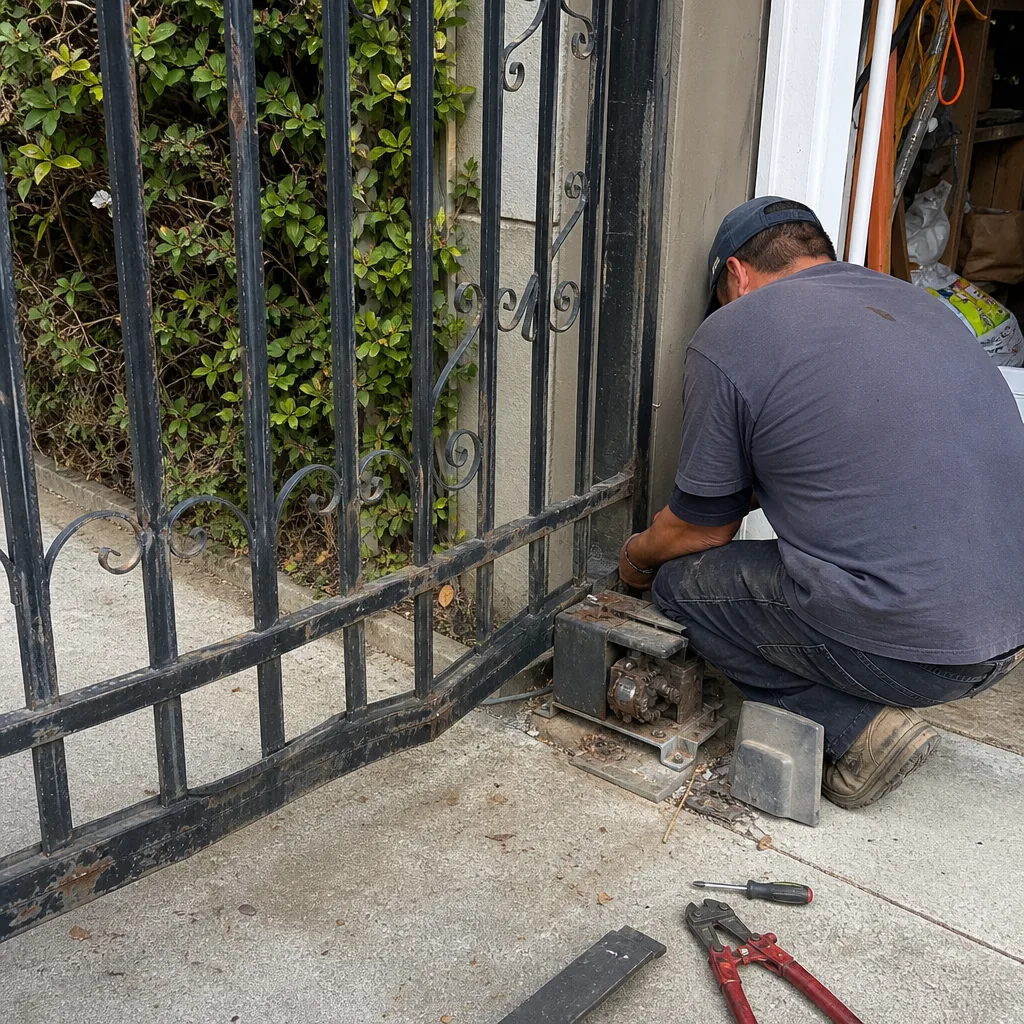 Before
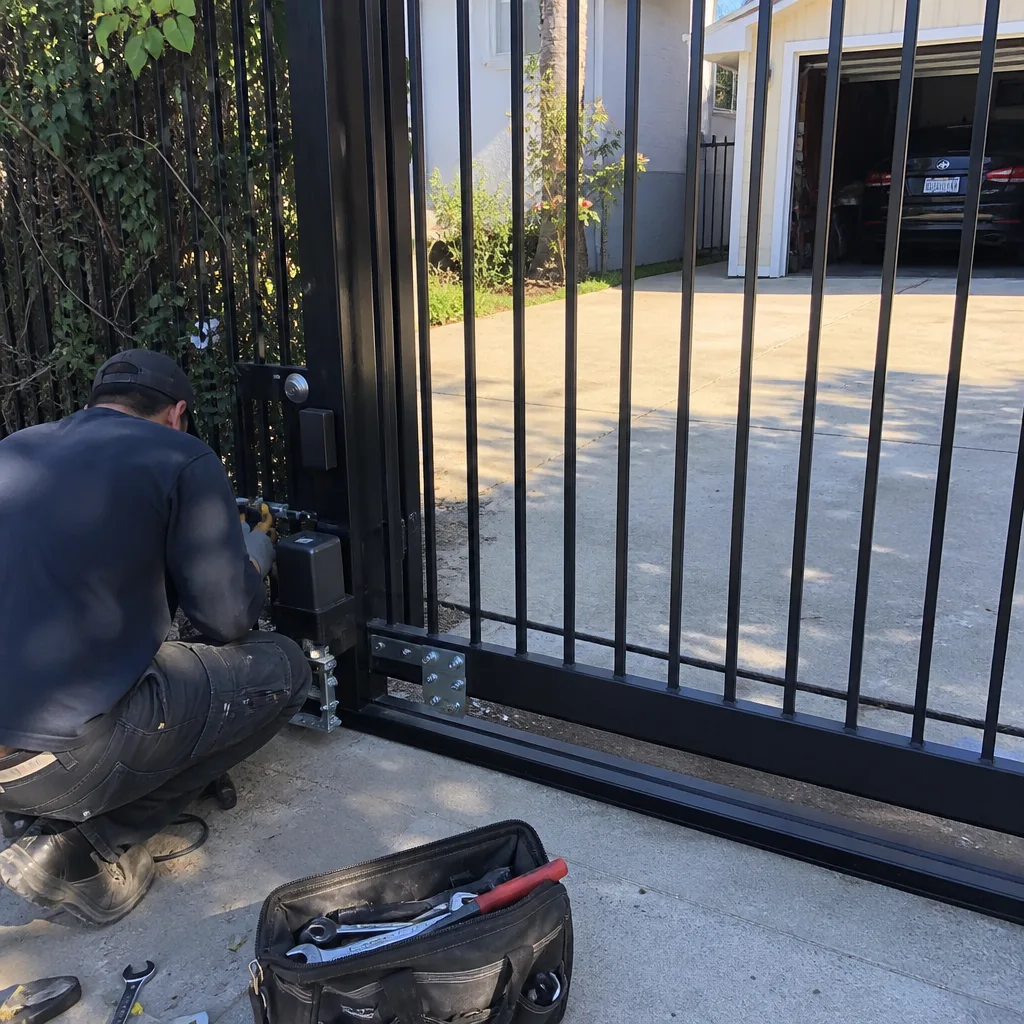 After
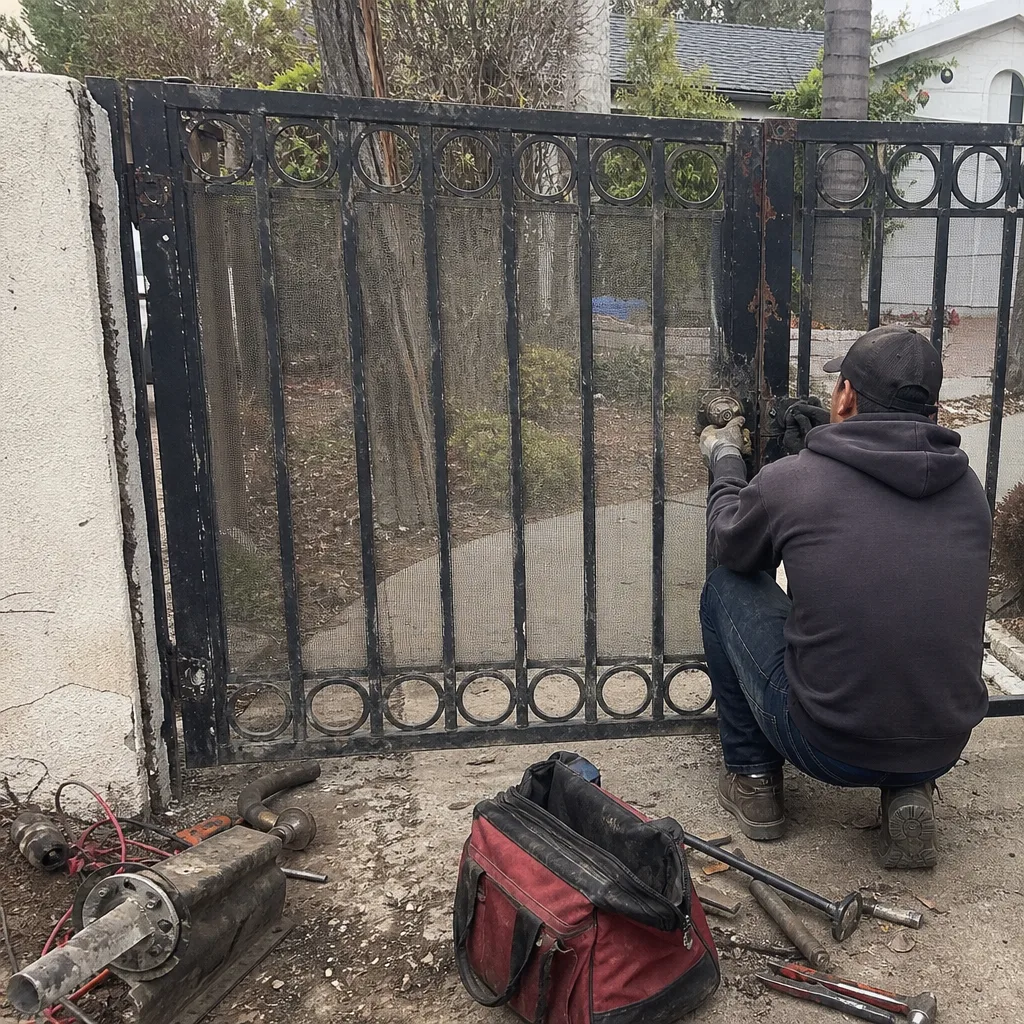 Before
 After
 Before
 After