
Last updated November 2, 2026
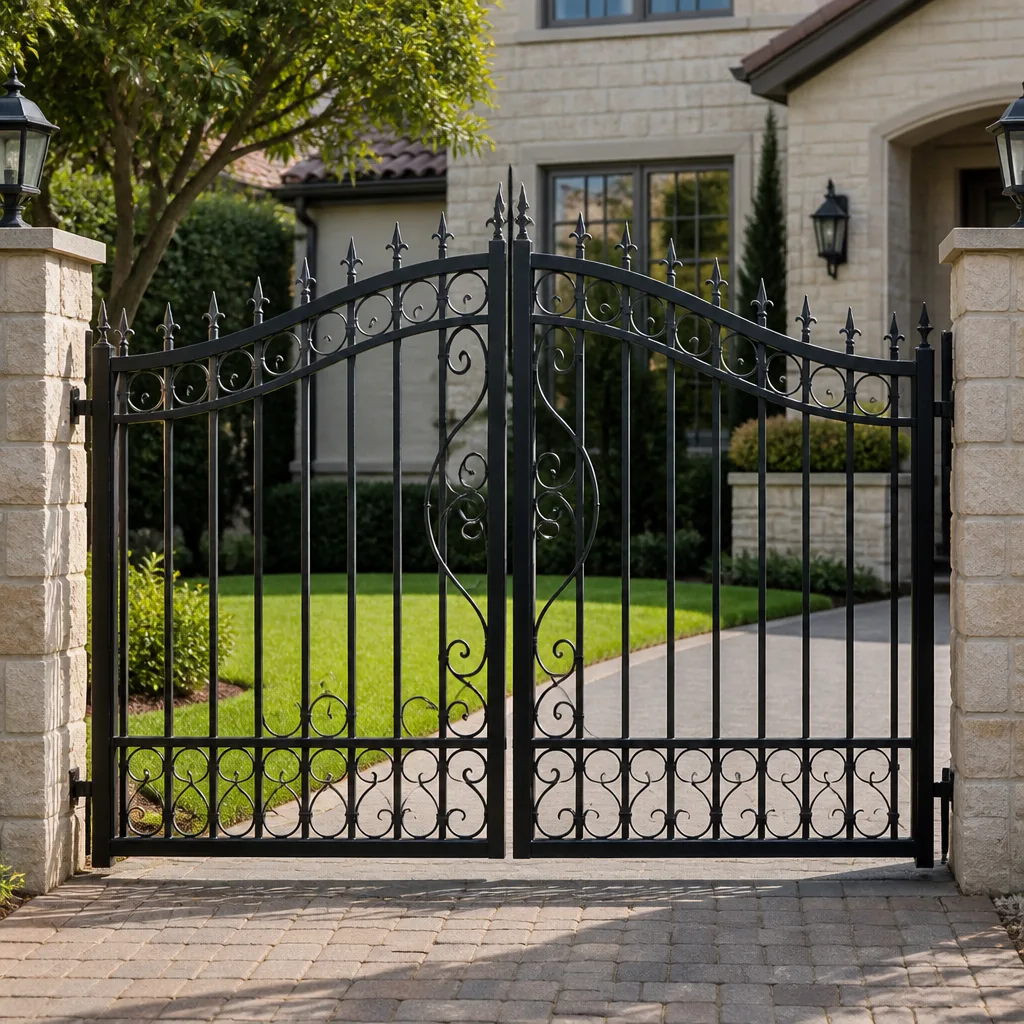 Wrought iron
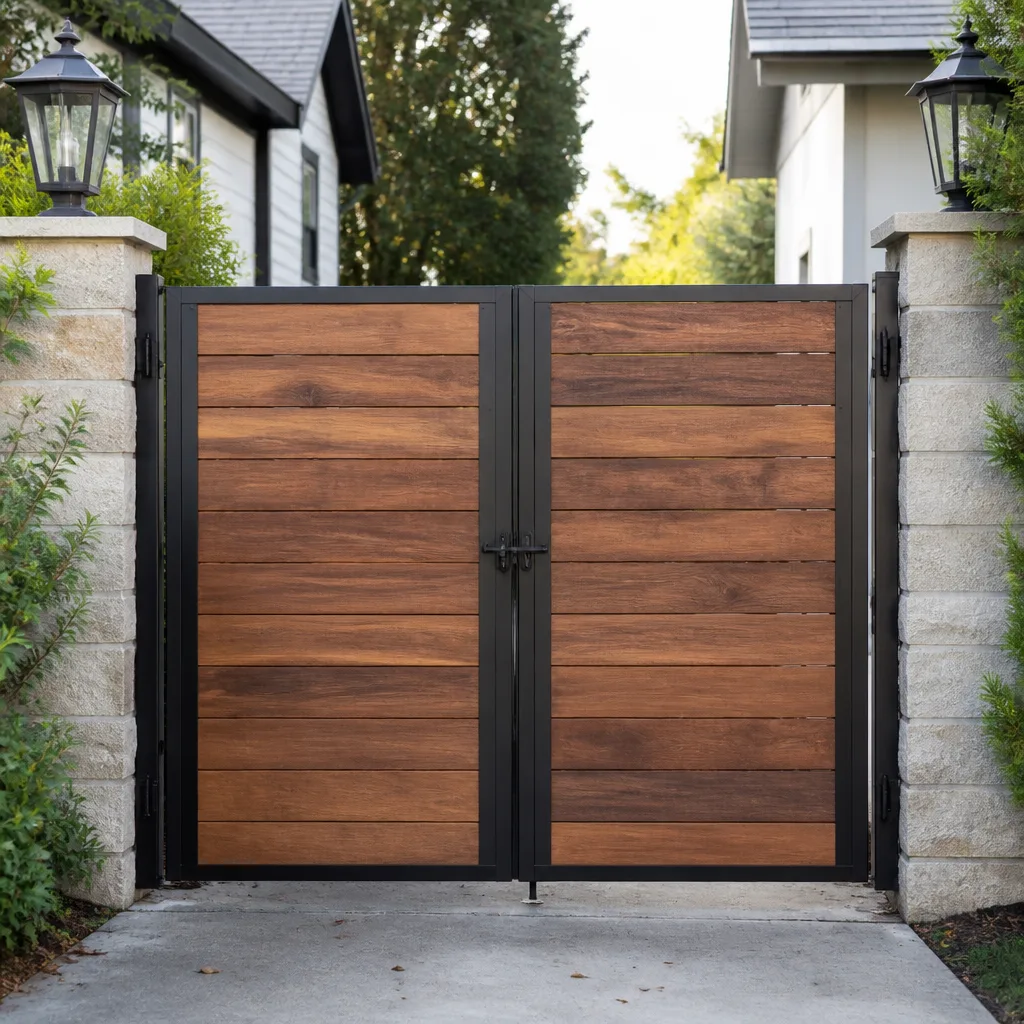 Wood & steel frame
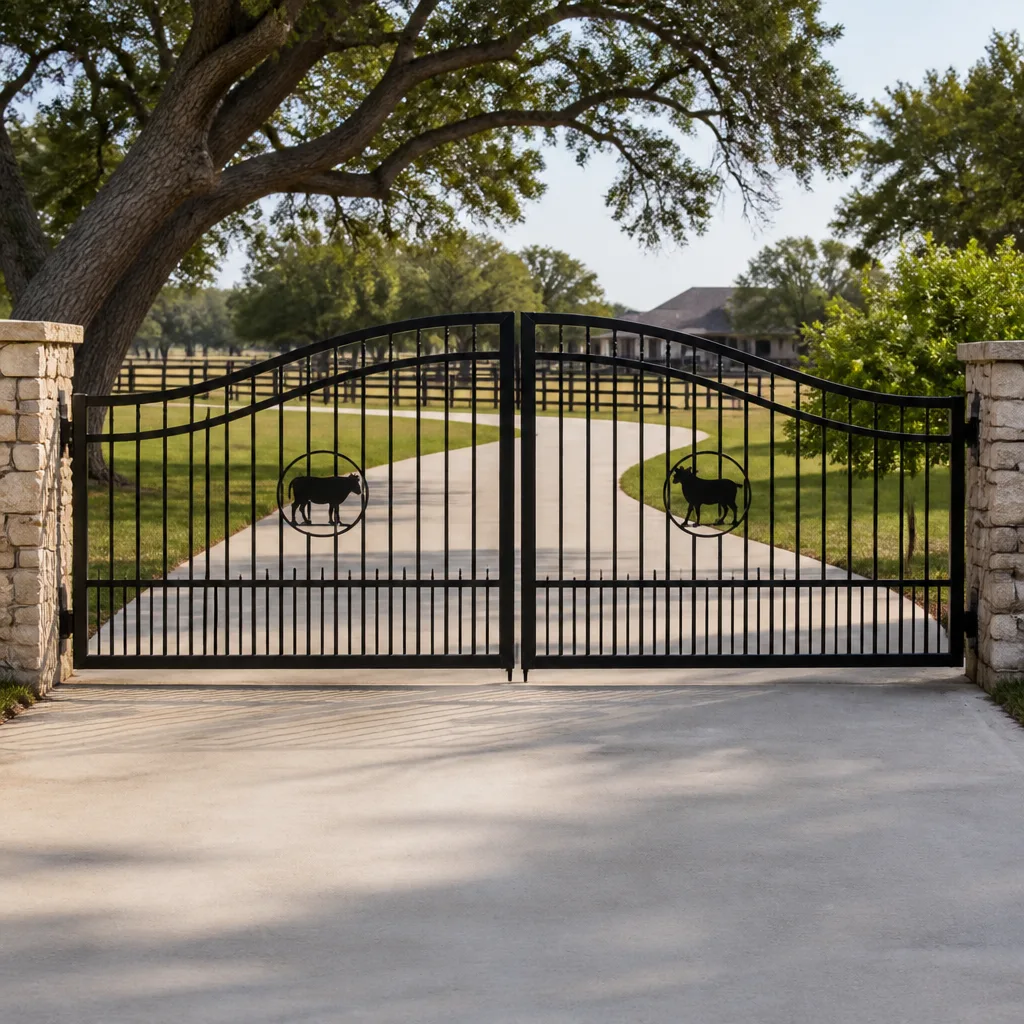 Farm & ranch
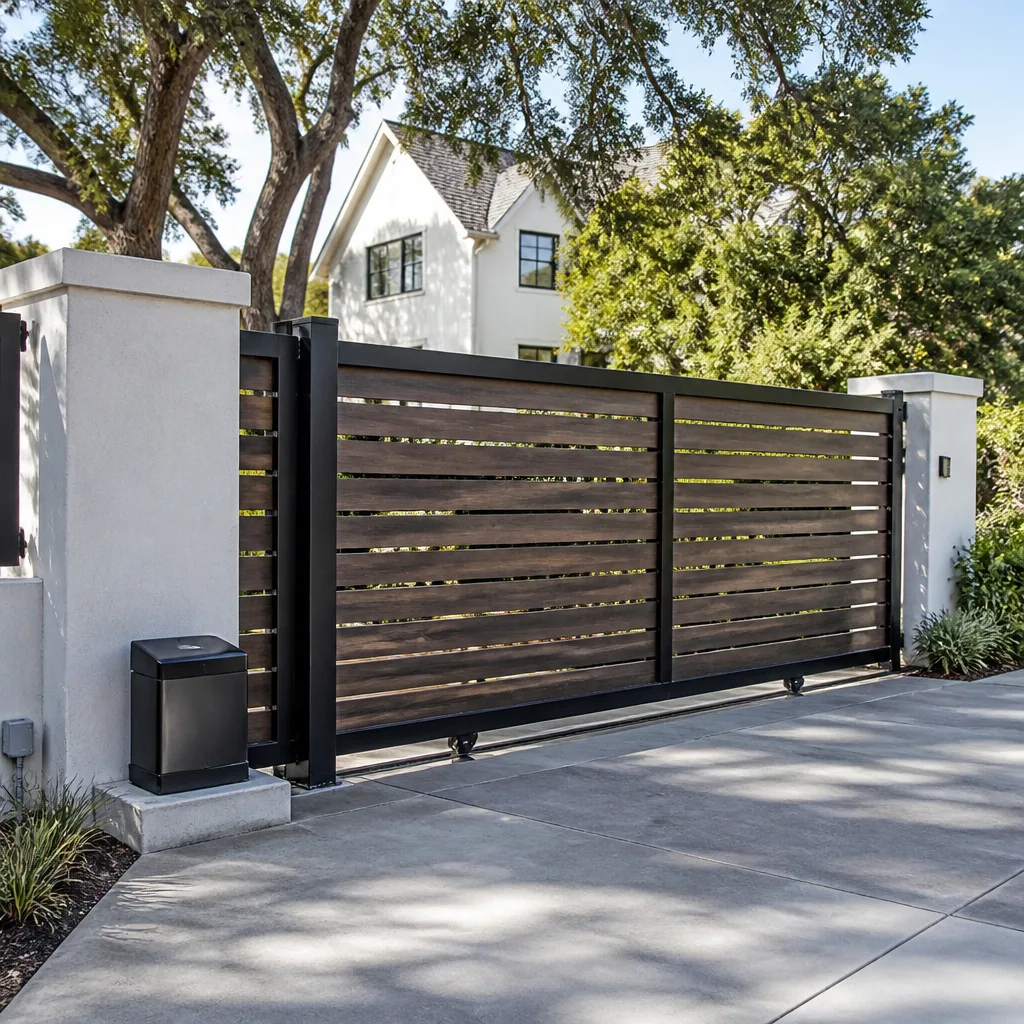 Sliding driveway gates
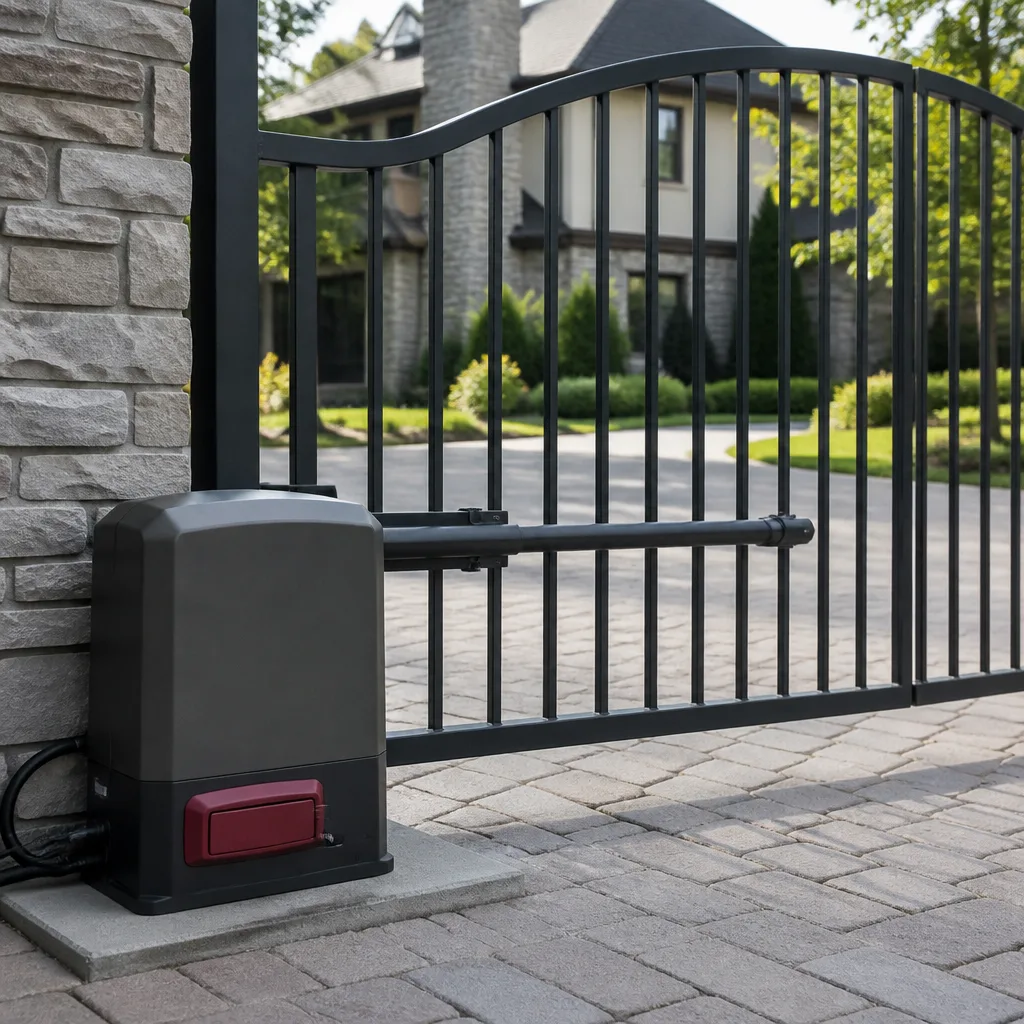 LiftMaster operators
Free on-site gate assessment - hinges, posts, and your LiftMaster or Nice gate operator checked before anything is quoted
The assessment is free and the quote is the invoice.
Get your free estimateSeasonal Gate Repair Care for Hyde Park South: Year-Round Homeowner’s Guide
July in Hyde Park South can push ground-level temperatures past 140°F on dark pavement – hot enough to liquefy standard gate grease and leave your rack running dry within 60 days of a fresh lube job. Most seasonal gate care guides follow a spring/summer/fall/winter template written for climates that freeze and thaw. That advice actively hurts gates here. Hyde Park South has two real seasons: a brutal dry-heat cycle that bakes lubricants out of bearings, and a marine-influence winter where coastal humidity corrodes control boards faster than any freeze would. This guide is built around those two cycles. You’ll learn the exact lubricant specs that survive a Hyde Park South summer, which board coatings actually protect against salt air and which are marketing language, and the replacement interval for backup batteries you should actually use.
Styles & brands we work with
- Wrought iron
- Wood & steel frame
- Farm & ranch
- Sliding driveway gates
- LiftMaster operators
Quick Answer
Seasonal gate care in Hyde Park South comes down to two maintenance windows per year: a May prep before the heat cycle bakes lubricants out of your operator, and an October prep before marine humidity and leaf debris stress your control board and loop detectors. Use a high-temperature grease like Mobilgrease XHP 222 on drive rails, inspect your conformal-coated control board in the fall, plan on replacing 12V sealed lead-acid backup batteries every 24 months, and recalibrate limit switches after late-summer thermal expansion shifts your gate frame. Budget roughly 45 minutes twice a year and you’ll avoid most emergency repair calls entirely.
Table of Contents
- Why Hyde Park South Doesn’t Have Four Seasons
- Summer Prep: Lubricants, Viscosity, and Thermal Stress
- Marine-Air Winter Prep: Boards, Coatings, and Corrosion
- Limit Switch Recalibration After Thermal Expansion
- Fall Debris and Loop Detector Sensitivity
- Battery Backup Degradation: The 30% Problem
- Your Twice-Yearly Hyde Park South Maintenance Schedule
- Common Mistakes to Avoid
- When to Call a Professional
- Frequently Asked Questions
- The Bottom Line
Why Hyde Park South Doesn’t Have Four Seasons
If you’ve lived in Hyde Park South for more than a summer, you already know the pattern. From late May through October, the sun hits dark asphalt and concrete hard enough to push surface temperatures well past 140°F. A gate operator mounted on a steel post in direct sun can reach 160°F internally. That heat does specific, predictable things to gate hardware. Grease thins and runs out of bearings. Hydraulic fluid loses viscosity. Control board capacitors degrade faster. Limit switch contacts drift as the metal frame expands.
Then the marine layer settles in from roughly November through April. Temperatures moderate, but relative humidity climbs. Overnight condensation forms on exposed metal and inside control cabinets. Saline air from the coast works into unsealed connectors. The result is a corrosion cycle that’s faster than what you’d get in a dry-cold climate, because there’s no freeze to kill the moisture – it just sits there, working on your board all season.
Understanding those two cycles changes your maintenance calendar. You’re not prepping for winter ice or spring thaw. You’re prepping for heat stress in May and corrosion in October. The rest of this guide follows that rhythm.
Summer Prep: Lubricants, Viscosity, and Thermal Stress
May is the critical month in Hyde Park South. By the time July arrives, you’re already behind. Here’s the core question most homeowners ask our gate repair team: what grease actually survives a Hyde Park South summer?
The answer is a high-temperature grease with a dropping point above 300°F. Standard NLGI #2 lithium grease starts to fail around 280°F, and on a dark steel gate track in August, you’ll exceed that surface temperature routinely. Our recommendation is Mobilgrease XHP 222, which has a dropping point near 550°F and holds up on slide gate rails and swing gate hinges through the worst of the season. If you’ve got a Viking or FAAC slide operator, the drive chain and rail are the first places to re-lube in May, and again in August if the gate runs daily.
Hydraulic operators need different attention. FAAC and BFT swing gate pistons use hydraulic fluid that thins as ambient temperature climbs. When the fluid gets hot, your gate can drift, close too fast, or stop mid-cycle. Check the fluid reservoir in early May. If the level is low or the fluid looks dark instead of clear amber, drain and refill before the heat hits. A FAAC 400 or BFT Deimos running on dirty fluid through a Hyde Park South summer burns out pump seals fast.
One thing most guides miss: solar heat on the operator housing. A black aluminum housing in direct sun acts like an oven. If you can’t relocate the operator, adding a ventilated shade panel above the unit drops internal temperatures by 15 to 20 degrees. That’s the difference between a board that lasts five years and a board that cooks in two.
Summer Prep Checklist
- Re-lubricate all drive rails, chains, and hinges with Mobilgrease XHP 222 or equivalent high-temp grease.
- Check hydraulic fluid level and condition on FAAC and BFT operators. Replace if dark or contaminated.
- Inspect control board capacitors for bulging or discoloration – heat accelerates capacitor failure.
- Verify cooling airflow around the operator housing. Add a ventilated shade panel if the unit sits in direct afternoon sun.
- Test the auto-reverse function on all safety edges and photo eyes, since thermal expansion can alter their alignment.
Marine-Air Winter Prep: Boards, Coatings, and Corrosion
When October rolls around in Hyde Park South, the marine layer returns and your control board becomes the weak point. Coastal humidity condenses inside control cabinets overnight, then sits on bare copper traces all day. This is where conformal coating matters, and where you need to know the difference between real protection and marketing language.
A genuine conformal coating is a thin polymer film applied to the PCB surface. The two types you’ll encounter on gate boards are acrylic and silicone. Acrylic coatings (AR, UR types) are cheap to apply but thin and prone to cracking with thermal cycling – and Hyde Park South thermal cycling is aggressive. Silicone coatings (SR type) are thicker, more flexible, and hold up to both humidity and heat. When you’re choosing the right gate repair brand for a LiftMaster or Linear operator, ask specifically whether the board has an SR silicone coating. If the spec sheet just says “conformal coated” without a type, assume it’s acrylic and expect to replace it sooner.
There’s also a practical step that costs nothing: install a small desiccant pack inside the control cabinet and replace it every October. A 40-gram silica gel pack absorbs the condensation that forms when warm daytime air meets a cool cabinet at night. It won’t solve a poorly sealed enclosure, but it’s the cheapest corrosion insurance you can buy.
For connectors and terminals, apply a dielectric grease like Permatex 22058 to exposed spade terminals and plug connections in October. This seals out the saline air that corrodes terminals on Viking and Ghost Controls swing arm operators within a single winter if left bare.
Winter Prep Checklist
- Open the control cabinet and inspect for white or green corrosion deposits on terminals and board edges.
- Verify your board has an SR silicone conformal coating, not an unspecified acrylic one.
- Apply dielectric grease to all exposed connectors and spade terminals.
- Replace the desiccant pack inside the cabinet with a fresh 40-gram silica gel pack.
- Check the cabinet gasket for cracks or gaps around wire entry points and seal with exterior-grade silicone caulk.
Limit Switch Recalibration After Thermal Expansion
Here’s a Hyde Park South pattern we see every year, usually in late August or September. A gate that closed perfectly in June now stops two inches short, or bumps the close stop hard, or reverses at the end of travel for no apparent reason. The homeowner assumes the board is failing. In most cases, it’s not the board – it’s thermal expansion.
Steel gate frames and rails expand when heated. Over a full summer of daily heating and cooling cycles, a steel slide gate can grow by a measurable amount, and the frame can shift slightly on its pad. The limit switches, which were calibrated when the gate was installed or serviced in cooler weather, are now slightly out of position. The fix is recalibration, not replacement.
Most operators – LiftMaster, FAAC, BFT, Viking, DoorKing – use either mechanical limit switches with physical cams or magnetic reed switches. Here’s the safe way to handle it:
- Run the gate through a full open and close cycle and note exactly where it stops versus where it should stop.
- For mechanical limits, adjust the cam position by no more than a quarter turn at a time, then retest the full cycle.
- For magnetic limits, loosen the magnet bracket and slide it in the direction the gate needs to travel, then tighten and retest.
- After adjusting, test the auto-reverse function three times in each direction – a limit switch that’s set too aggressive can trigger an unnecessary reverse or, worse, fail to stop the gate.
If your gate uses a Hall-effect sensor and the adjustment feels imprecise, or you’re getting repeated reversal errors after calibration, that’s the point where calling an electric gate specialist in Hyde Park South saves you from chasing a board fault that doesn’t exist. Most calibration calls take under an hour.
Fall Debris and Loop Detector Sensitivity
October and November are the worst months in Hyde Park South for ghost activations and false triggers. The gate opens when nobody’s there, or refuses to close because it thinks a car is on the loop, or cycles open and closed repeatedly at 3 a.m. Calls about this spike every fall, and the cause is usually leaf litter and dry debris.
Here’s what’s happening. A loop detector works by measuring the inductance of a buried wire loop. A vehicle passing over the loop changes that inductance, which triggers the gate. Fall leaves and dry brush accumulating on the loop surface change the dielectric constant of the area above the loop, which shifts the baseline inductance reading. A sensitive loop detector interprets that shift as a vehicle, and the gate cycles.
The fix isn’t replacing the loop. It’s a two-step process:
- Clear the loop area. Rake leaves and sweep debris off the loop zone every two weeks in October and November. The loop typically extends a foot or two beyond the visible saw-cut line in the pavement.
- Lower the sensitivity threshold. Most loop detector modules (Reno A&E, EMX, or embedded in FAAC, BFT, and DoorKing control boards) have a sensitivity setting from 1 to 9. Drop it one level at a time until false triggers stop. You want the gate to still detect a bicycle or motorcycle, but ignore a pile of wet leaves.
Wet leaves are the worst offender, because water conducts and shifts the field more than dry leaves. After the first real rain of fall, expect a wave of false triggers if the loop hasn’t been cleared. A product like a loop detector with automatic frequency adjustment can help, but the manual sensitivity adjustment is free and usually sufficient.
Battery Backup Degradation: The 30% Problem
Most backup batteries in Hyde Park South gates are 12V sealed lead-acid units, and they die on a schedule that has nothing to do with how often you use them. Heat kills lead-acid chemistry. Two full Hyde Park South summers inside a hot control cabinet will typically reduce a sealed lead-acid battery’s capacity by 30% or more, even if it tests fine on a simple voltage meter. That’s the trap: voltage reads 12.6V, the board thinks the battery is fine, but under load the battery can’t deliver enough current to run the gate more than once or twice.
The practical replacement interval in this climate is every 24 months. Not three years, not five. Two years. If you’ve got a LiftMaster or Linear operator with a factory backup battery, mark the install date and plan the replacement. For Viking and Mighty Mule systems using aftermarket batteries, a 7Ah or 9Ah battery is typical, and you’ll pay around $30 to $60 per unit. It’s the cheapest insurance against the exact scenario where you need the backup and it’s dead.
One more point: battery health and the marine layer. Condensation inside the battery compartment accelerates terminal corrosion. When you do your October prep, remove the battery, clean the spade terminals with a wire brush, and coat them lightly with dielectric grease before reconnecting. It extends the battery’s usable life and prevents intermittent power faults that mimic board failures.
Your Twice-Yearly Hyde Park South Maintenance Schedule
You don’t need a monthly routine. In this climate, two focused maintenance sessions per year cover 90% of everything that goes wrong. Here’s the consolidated schedule, organized by month.
May: Summer Prep Session (45 minutes)
- Re-lubricate drive rails, chains, and hinges with high-temperature grease.
- Check hydraulic fluid in FAAC and BFT operators; replace if dark.
- Inspect control board capacitors for heat damage.
- Add or repair shade panel above the operator housing.
- Test photo eyes and safety edge alignment after thermal expansion.
October: Winter Prep Session (45 minutes)
- Open control cabinet and inspect for corrosion on terminals and board edges.
- Verify SR silicone conformal coating on control board.
- Apply dielectric grease to exposed connectors.
- Replace desiccant pack; seal cabinet entry points.
- Clear loop detector zone of leaves and debris; adjust sensitivity down one level.
- Clean and grease battery terminals.
Between those two sessions, the only monthly task that pays for itself is a 30-second visual check of the gate track and chain for debris. In Hyde Park South, palm fronds and bottlebrush foliage work their way into slide tracks year-round, and a stuck frond can jam a 1,200-pound gate mid-cycle and strip a gear before you notice anything’s wrong.
Common Mistakes to Avoid
- Using standard lithium grease in summer. Standard NLGI #2 lithium grease thins out at the temperatures Hyde Park South pavement reaches in July and August. It runs off the rail within weeks, leaving the rack dry and accelerating wear on the pinion gear.
- Trusting a voltage reading on an old backup battery. A 12V sealed lead-acid battery can read 12.6V on a meter while delivering 30% less current under load. After two Hyde Park South summers, replace it regardless of what the meter says.
- Skipping fall loop calibration until problems start. The first wet October storm brings a wave of false triggers. If you lower loop sensitivity before the leaves pile up, you skip the 3 a.m. gate cycling that wakes the whole block.
- Replacing the board before checking the limit switches. When a gate stops short or overtravels in late summer, the board is rarely the cause. Thermal expansion shifts the frame, and recalibrating limits fixes it for free.
- Buying a “conformal coated” board without asking what type. Unspecified coatings are usually acrylic, which cracks under Hyde Park South thermal cycling. Demand SR silicone coating or expect a shorter service life.
- Ignoring the cabinet gasket. A cracked gasket lets salty marine air into the control cabinet all winter. Sealing entry points with silicone caulk is a five-minute job that prevents months of corrosion damage.
- Lubricating hydraulic pistons with the wrong product. Hydraulic operators don’t take grease on the piston shaft. Use the manufacturer-specified hydraulic fluid. Grease on a FAAC or BFT piston attracts grit and destroys seals.
When to Call a Professional
Some maintenance you can do yourself with a grease gun and a wire brush. Some things need an electric gate specialist who works on your specific brand. Call a pro when the gate is blowing fuses or tripping breakers – that points to a motor draw or board fault, not a lube issue. If your FAAC or BFT hydraulic system is losing fluid after a refill, there’s a seal failure you can’t fix from the outside. If the gate reverses mid-cycle for no reason and the limit switches are correctly calibrated, you’re likely looking at a failing safety circuit or motor. If your LiftMaster or Linear board shows scorch marks or swollen capacitors, stop resetting it and get it replaced before it fails completely and leaves the gate open. Gate Repair Hyde Park South offers gate repair in Hyde Park South with free estimates – call (877) 752-8839 and we’ll diagnose it on site.
Frequently Asked Questions
Twice a year at a minimum – once in May before the summer heat cycle and again in August or September if the gate runs daily. Use a high-temperature grease like Mobilgrease XHP 222, not standard NLGI #2 lithium grease, which liquefies at the surface temperatures Hyde Park South pavement reaches in summer. For a free lubrication check as part of a service call, call (877) 752-8839.
Yes, and it’s the leading cause of winter board failures in Hyde Park South. Overnight condensation combined with saline air corrodes bare copper traces and terminals within a single season if the board isn’t protected. Look for an SR silicone conformal coating on the board, apply dielectric grease to connectors in October, and keep a fresh desiccant pack in the cabinet.
Thermal expansion. Steel gates and frames expand measurably over a full Hyde Park South summer, shifting the limit switch positions that were calibrated in cooler weather. The fix is recalibration of the mechanical or magnetic limit switches, not board replacement. If calibration doesn’t hold, call (877) 752-8839 for an electric gate diagnostic.
Plan on replacing 12V sealed lead-acid backup batteries every 24 months in Hyde Park South. Two summers of heat exposure typically reduces capacity by 30% or more, even if the voltage reads normal. Replacement batteries cost $30 to $60 and take 15 minutes to swap, including terminal cleaning and dielectric grease application.
Leaf litter and wet debris on the loop detector shift the inductance baseline, which the detector reads as a vehicle. Rake the loop zone clear every two weeks in fall and lower the loop sensitivity setting by one level. If false triggers continue after sensitivity adjustment, call (877) 752-8839 – there may be a loop continuity or ground fault issue.
Yes, and using the wrong product causes damage. Slide gates and swing gates with chain or gear drives need high-temperature grease on rails, chains, and hinges. Hydraulic operators like FAAC and BFT swing pistons need manufacturer-specified hydraulic fluid – never grease on a piston shaft, which attracts grit and destroys seals.
The Bottom Line
Hyde Park South gate care isn’t about four seasons. It’s two maintenance windows per year: May prep for the heat cycle and October prep for the marine layer. High-temperature grease on drive rails, SR silicone-coated boards, dielectric grease on terminals, and a 24-month battery replacement schedule will prevent the majority of avoidable repair calls. Recalibrate limit switches after summer thermal expansion and lower loop sensitivity before the leaves pile up. Most of this costs less than $50 per year in materials and 90 minutes of time. When you need a brand-specific electric gate specialist, electric gate repair in Hyde Park South is what we do – from the motor to the keypad. For free estimates on gate maintenance, repair, or a new gate installation in Hyde Park South, call (877) 752-8839. Start with the Gate Repair Hyde Park South home page if you want to see the full scope of what we handle.
Written by the team at Gate Repair Hyde Park South. For more guides & resources, visit our blog.
See the difference
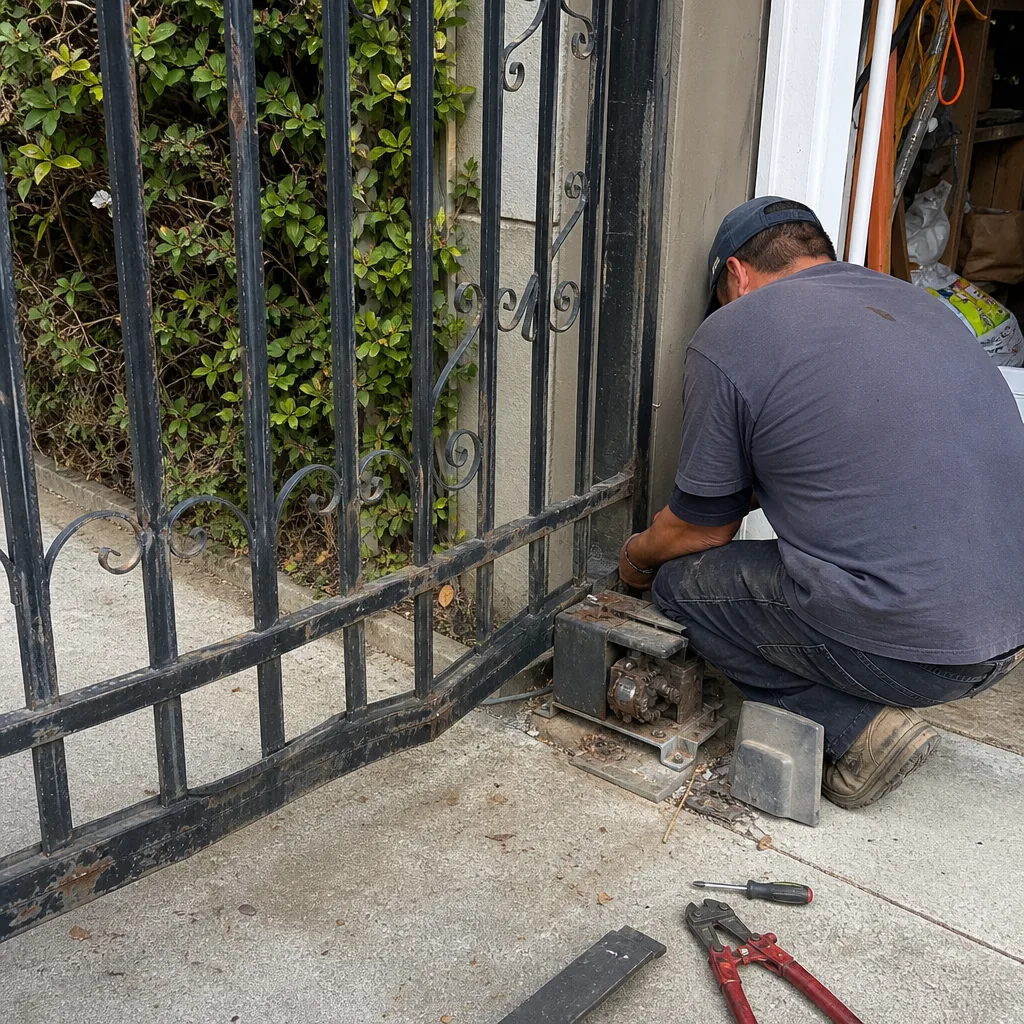 Before
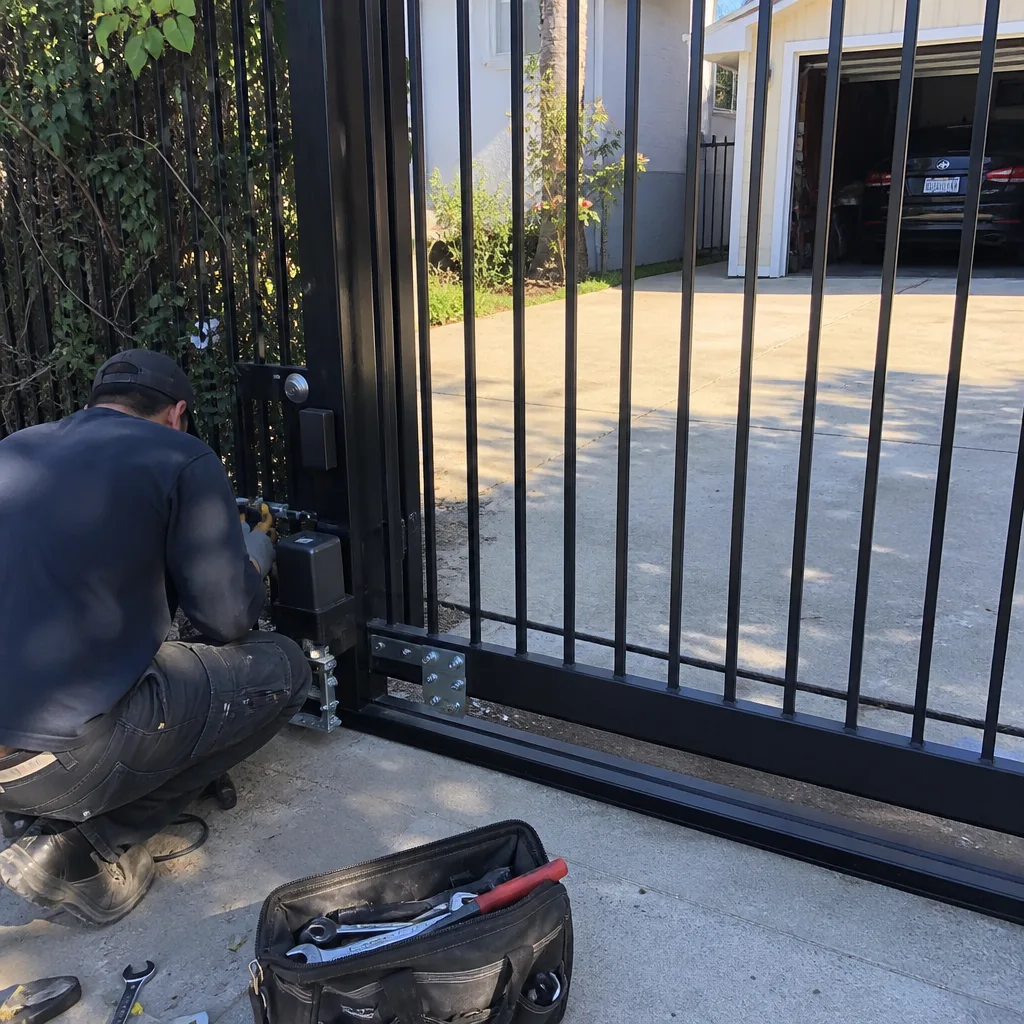 After
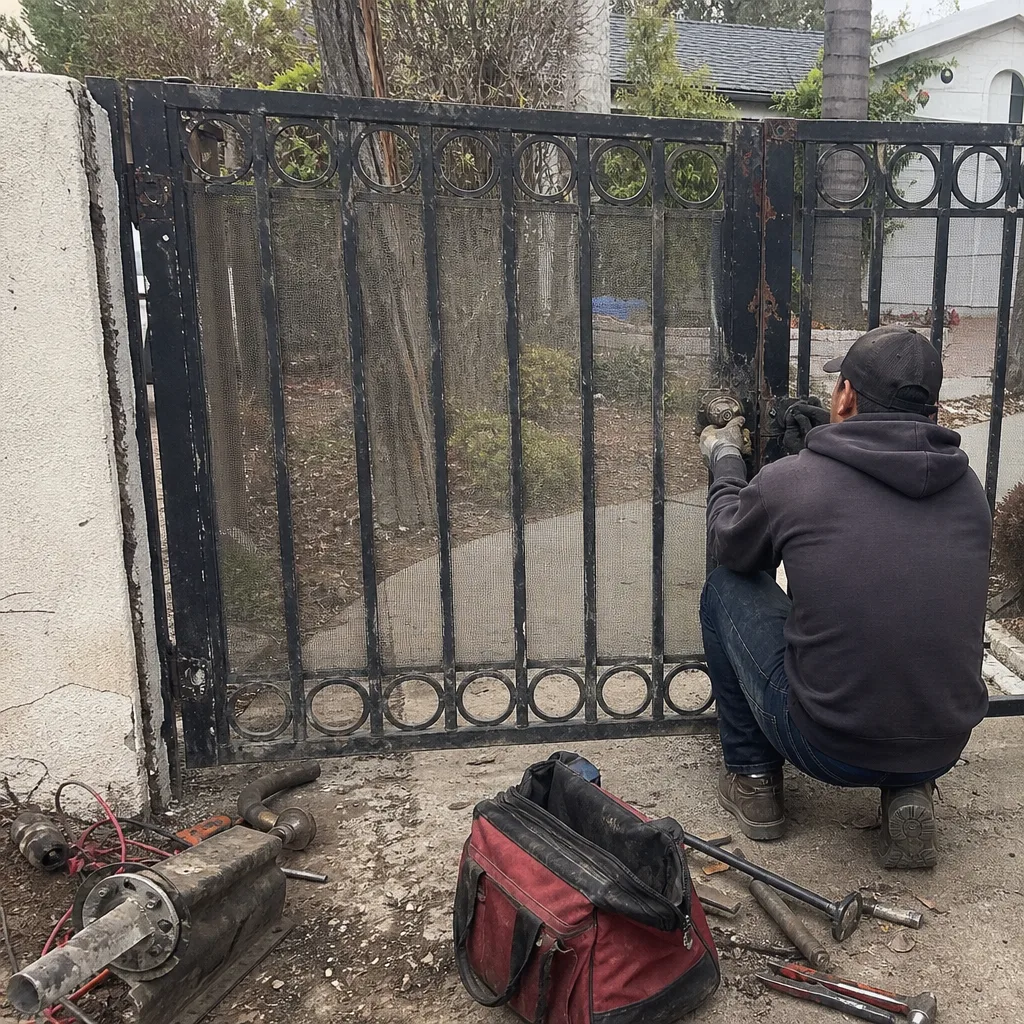 Before
 After
 Before
 After